Fresh Blog | April 2026 | Read Time: 7 mins | Team Opulnz Abode | RERA: UKREP04240000553
Some assets appreciate. Some assets hold value. And some assets — a tiny handful, perhaps one in a generation — become impossible to replicate the moment they are built. Their scarcity is not manufactured by a developer’s marketing team. It is written into the geography, the regulation, the ecology, and the singular alignment of factors that made them possible in the first place.
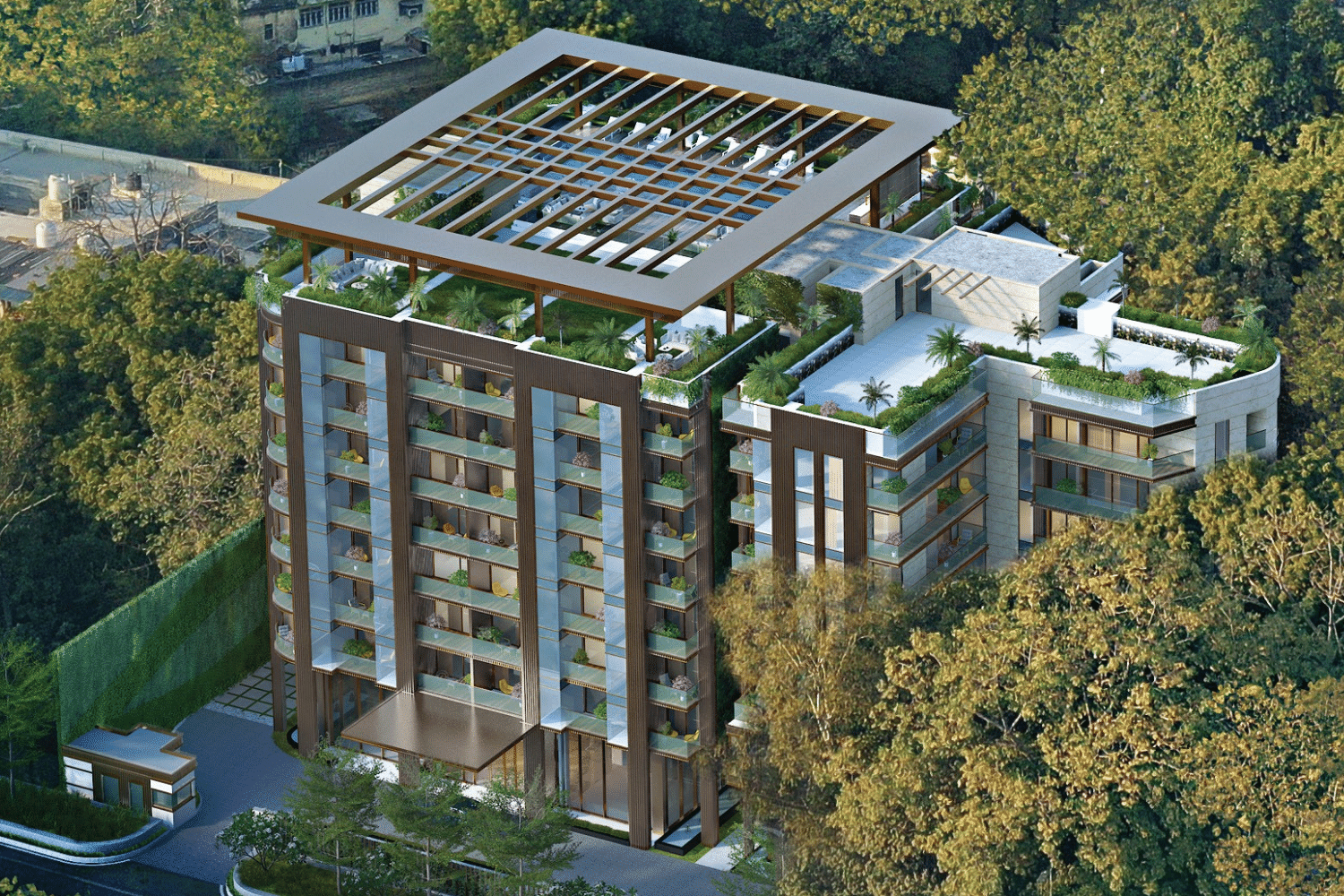
Eldeco Terra Grande in Narendra Nagar is one of those assets. Thirty private estate villas on 15 acres at 4,000 feet above sea level, above Rishikesh, overlooking the Ganga valley, next to The Westin Narendra Nagar, on the Char Dham Highway. Starting at ₹19 crore. RERA registered. Backed by HDFC Capital. Built by a developer with 35 years and 200+ delivered projects.
The question that every serious Delhi NCR buyer is beginning to ask is not whether Terra Grande is a good buy. It is whether their grandchildren will ever forgive them for not buying it when they had the chance.
You are not buying a villa. You are founding an address that your family will return to for three generations — and that no amount of money will be able to recreate after these 30 are gone.
The Scarcity Is Not Marketing — It Is Geography
Why Narendra Nagar cannot produce another Terra Grande, ever
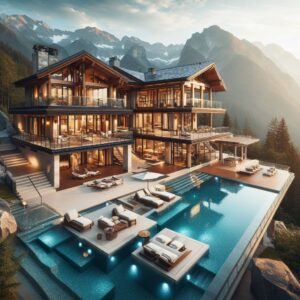
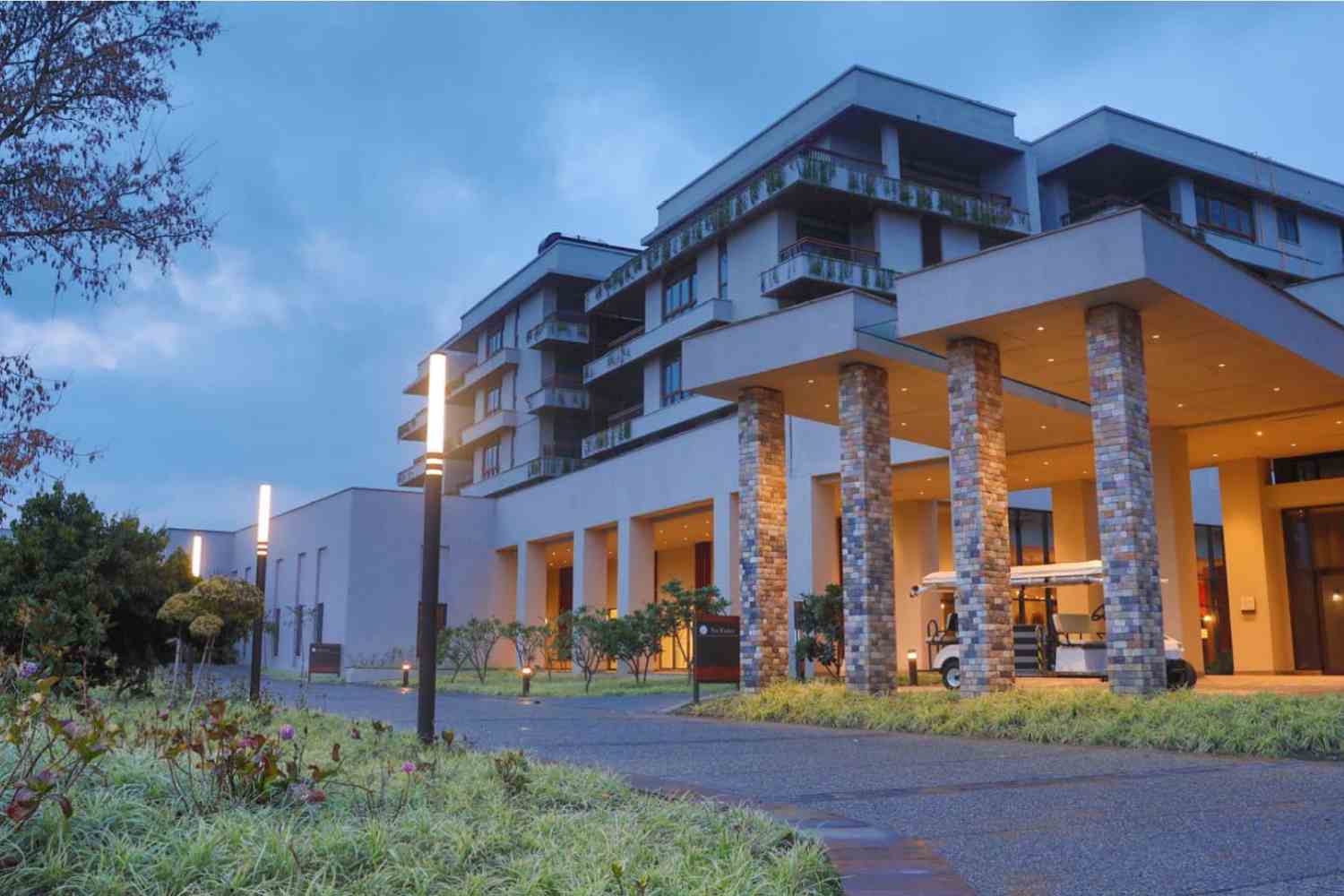
Narendra Nagar sits on a ridge above Rishikesh at approximately 4,000 feet above sea level. The terrain here is a narrow elevated zone — not a flat plateau where development can spread in all directions. To the north, the Himalayan forest range begins. To the south and west, the land drops away steeply into the Ganga valley. The Char Dham Highway runs through the ridge. The Westin Narendra Nagar occupies one of the finest positions on this ridge. Terra Grande occupies another.
There is no equivalent land parcel remaining in Narendra Nagar at this elevation, with this orientation, with this view corridor. Uttarakhand’s eco-sensitive zone regulations restrict construction density in the Himalayan foothills — projects of the scale, quality, and low density that Terra Grande represents require specific land classifications that are no longer freely available.
This is not a developer claiming limited edition. This is a physical and regulatory reality: the land that could produce another Terra Grande does not exist at this location. When the 30th villa at Terra Grande is sold, this particular combination of altitude, views, Ganga proximity, Westin adjacency, and Char Dham access will exist in exactly 30 private hands. Not 31.
The eco-sensitive zone premium — why Uttarakhand’s regulations protect your investment
The same regulations that make building in the Himalayan foothills difficult are what make owning here extraordinarily valuable. Eco-sensitive zone restrictions do not just limit future competition — they ensure that the landscape your villa overlooks will remain undisturbed. The Ganga valley below Terra Grande will not be filled with the apartment towers and commercial complexes that have overwhelmed the views from once-premium hill destinations.
Your view at Terra Grande is constitutionally protected by India’s environmental framework in a way that a Golf Course Road apartment’s Aravalli view is protected — but more absolutely. The Aravallis face encroachment pressure. The Himalayan eco-sensitive zone does not. When you buy a Terra Grande villa, you are buying a view that India’s regulatory structure has permanently committed to preserving.
The Generational Argument — Why This Is a Family Asset, Not a Personal One
The bungalows of Civil Lines and Defence Colony that sell for ₹50-200 crore today were bought by the first generation for a fraction of that. The families that did not sell are the ones that made the generational wealth.
What the first generation buys at Terra Grande — and what the third generation inherits
Delhi NCR’s most storied family wealth stories share a common thread: a patriarch who bought an address when it was possible to buy — a Defence Colony bungalow in 1965, a Jor Bagh plot in 1972, a Lutyens’ bungalow that cost ₹8 lakh in 1980 and sells for ₹200 crore today. They did not buy these assets because they saw a precise IRR calculation. They bought them because they understood that the combination of location permanence, supply constraint, and address prestige would compound in ways that no spreadsheet could model.
Terra Grande is a similar founding moment for the hill category. The first generation buys at ₹19-30 crore. They create the family’s hill address — the place where children learn to wake up to a mountain view, where cousins spend summers together, where the family gathers for Diwali away from the city’s noise. The second generation inherits a villa that has compounded significantly and deepens the family’s relationship with the asset. The third generation holds something that no money can replace — an address that pre-dates their birth, that carries their family’s stories, and that simply cannot be recreated at any price.
The hill address as family identity — what Mussoorie’s old families already understand
The families of Mussoorie, Landour, Kasauli, and Ranikhet have understood for 100 years what Delhi NCR’s newer wealth is only now beginning to grasp: a hill address is not a second home. It is a primary identity. Old Mussoorie families do not describe their hill house as their ‘vacation home.’ They describe Mussoorie as where their family is from, even if they live in Delhi 10 months of the year.
This is the identity that Terra Grande’s 30 families will build. Not immediately — these things take a generation to settle. But the conditions for it are present: the address (Narendra Nagar, the most coveted hill above Rishikesh), the scarcity (30 families total), the natural anchor (the Ganga, India’s most spiritually weighted river, visible from every villa), and the cultural context (the Char Dham Highway, India’s most sacred pilgrimage corridor, running past the gate).
30 families — the community that Terra Grande creates by design
Thirty families is not a large community. In most luxury apartment projects, 30 families share a single floor or two. At Terra Grande, 30 families share 15 acres, a 30,000 sq ft clubhouse, and a Westin hotel as a shared neighbour. The community is small enough that every family knows every other — that the children grow up together, that the families develop the social bonds that persist across decades.
This social architecture is itself a legacy asset. When your grandchild says ‘we have always known the Khanna family from Terra Grande,’ they are describing a relationship that was founded by the act of purchase — the same kind of relationship that has sustained the great hill families of Landour and Kasauli for four generations. Terra Grande is the founding moment of a new version of that community, available to 30 Delhi NCR families, and unavailable to anyone else.
Why Delhi NCR Buyers Specifically Are Choosing Terra Grande — The Psychology Behind the Interest
The 30-year guilt of NCR’s old money — the hill address they never bought
Speak to any established Delhi NCR business family about their real estate regrets, and two themes recur with uncomfortable frequency. One is the Lutyens’ or South Delhi bungalow they could have bought in the 1980s or 90s and did not. The other is the hill property — Mussoorie, Shimla, Nainital, Kasauli — they evaluated, found slightly too inconvenient, and decided against. Both categories of asset have since appreciated 20-50x. Both are now essentially inaccessible to new buyers at entry-level pricing.
Terra Grande represents the NCR buyer’s last reasonable window to avoid repeating the second of those regrets. Narendra Nagar in 2026 is Mussoorie in 1985. The address is established — The Westin has operated here for years, validating the location’s premium standing. The infrastructure is arriving — the Delhi-Dehradun Expressway opened on April 14, 2026, cutting drive time to 3.5 hours from Gurgaon. The supply is genuinely constrained — 30 villas, not 300, not 3,000. And the price, at ₹19 crore, will look conservative by 2030.
The post-pandemic rewiring of what ‘home’ means for India’s HNI families
The pandemic permanently altered how Delhi NCR’s HNI families relate to space, nature, and the concept of a safe base. Between 2020 and 2022, families who had hill properties discovered that those properties were not just vacation assets — they were essential infrastructure for maintaining family cohesion, mental health, and physical well-being during a crisis. Families who did not have hill properties spent ₹10,000-30,000 per night renting available inventory at a premium, discovering that even expensive temporary alternatives could not substitute for ownership.
That experience created a durable shift in purchase intent. The HNI family that spent six months renting a villa in Kasauli or Mussoorie in 2020-21 has not forgotten the cost or the insecurity of not owning. The Terra Grande enquiry pipeline from Delhi NCR is disproportionately composed of families who had this experience and resolved never to repeat it. They are not buying a vacation home. They are buying certainty — the guarantee that when the world requires a retreat, theirs is waiting, staffed, and ready.
The Ganga factor — why spiritual geography adds a premium that no hill address elsewhere can replicate
Narendra Nagar’s position above Rishikesh on the Char Dham Highway gives Terra Grande a spiritual address that no other luxury hill destination in India commands. The Ganga flows below. The pilgrimage circuit to Badrinath, Kedarnath, Gangotri, and Yamunotri begins at this road. For the Hindi-speaking business families of Delhi, UP, and Rajasthan that form a large share of NCR’s HNI wealth, this proximity to the most sacred geography in Hinduism is not a secondary consideration — it is a primary one.
A villa above Rishikesh where you can offer morning prayers at a Ganga ghat within 30 minutes of waking, where the Char Dham circuit begins at your gate, where the sound of the river carries to your terrace on clear evenings — this is not a lifestyle feature. It is a spiritual inheritance that the first-generation buyer passes to their family for as long as the villa is in the family.
The Return That Scarcity Delivers — Why ₹19 Crore in 2026 Will Be the Number Discussed at the Dinner Table in 2036
The comparable that haunts every missed hill buy — Mussoorie, Kasauli, Nainital
Property prices in Mussoorie’s best addresses have gone from ₹20-40 lakh per nali (approximately 200 sq yards) in 2005 to ₹2-5 crore per nali in 2026 — a 50-100x appreciation over 20 years. Kasauli’s premium plots have compounded at 20-25% CAGR in the past decade, driven entirely by supply constraint (new construction is severely restricted) and sustained NCR demand (the same families that missed Mussoorie buying Kasauli instead).
Narendra Nagar, in April 2026, is at the beginning of this appreciation curve — not the middle. The Delhi-Dehradun Expressway has just made it 3.5 hours from Gurgaon. The Westin has already validated the address’s premium standing. Terra Grande’s 30 villas have established the reference price point at ₹19 crore. The next comparable transaction in this micro-location will not be at ₹19 crore. It will be materially above it — because there is no new supply available to compete with Terra Grande, and the existing 30 owners will not sell lightly.
What makes hill luxury returns superior to city luxury returns over 10+ years
Delhi NCR’s luxury apartment market has delivered strong returns — DLF Camellias from ₹20,000 to ₹50,000-70,000 per sq ft over a decade is the benchmark. But apartment appreciation is cyclical and corridor-dependent: a new developer entering the same corridor creates supply that moderates returns. A hill estate with 30 villas has no such cycle. No developer can enter Narendra Nagar at 4,000 feet with Westin adjacency and Ganga valley views to compete with Terra Grande, because the land does not exist.
The asymmetry of hill luxury returns is structural: demand grows with India’s expanding UHNWI base (13,600 UHNWIs, growing 12-15% annually), while supply is permanently fixed. In this asset class, time is the most powerful instrument available to the first-generation buyer.
The rental yield reality — why an empty villa earns while you are not there
Terra Grande villas positioned as premium short-stay rentals command ₹75,000-2,50,000 per night depending on size, season, and configuration. The post-expressway addressable tenant market from Delhi NCR has expanded dramatically — the same corporates and HNI families who previously could not justify Narendra Nagar for a weekend (6 hours was prohibitive) now have a 3.5-hour drive. Demand for premium short-stay villa rentals in this location will compound as expressway-enabled weekend travel from Delhi NCR normalises.
At conservative occupancy of 90-120 nights per year and average nightly rates of ₹1,00,000, a Terra Grande villa generates ₹90 lakh to ₹1.2 crore in annual rental income. Against an acquisition cost of ₹19-30 crore, this represents a gross rental yield of 4-6% — among the strongest in any Indian luxury real estate category, typically associated with Goa and Alibaug coastal properties. The difference is that Narendra Nagar’s supply constraint is permanently stronger than Goa’s, where new luxury villa development continues to add inventory.
The Eldeco-HDFC Capital Trust Architecture — Why Delivery Is Not in Question
Legacy assets require legacy builders. Eldeco Group’s 35-year track record across 200+ projects in 21 cities is the developer credibility that hill real estate buyers require — not because hill construction is fundamentally different, but because the terrain, the regulatory environment, and the infrastructure challenges of Uttarakhand development separate serious developers from opportunistic ones.
HDFC Capital’s financial backing of Terra Grande brings institutional fund governance to the escrow — the same mechanism that sophisticated luxury buyers in Gurgaon’s most credible projects rely on to ensure construction funds are not diverted and timelines are not abandoned. RERA registration (UKREP04240000553) with Q3 2027 possession gives the project a defined regulatory accountability framework.
Architecture by Sandeep Geeta & Associates — a practice with a specific hill-project portfolio. Landscape by ROHA Landscape Architecture — specialists in terrain-sensitive landscape design. This is not a Delhi developer who has decided to build in the hills. This is a developer who has assembled the right specialists for this specific terrain.
- RERA: UKREP04240000553. Registered. Possession: Q3 2027.
- Developer: Eldeco Group — 35 years, 200+ projects, 21 cities.
- Financial backer: HDFC Capital. Institutional fund governance on construction escrow.
- Architect: Sandeep Geeta & Associates (SGA) — hill-specific residential expertise.
- Landscape: ROHA Landscape Architecture — terrain-sensitive design specialists.
- Sample villa: Open for viewing. Contact Opulnz Abode at +91 9654888862 to schedule.
Enquire for a Private Villa Viewing — +91 9654888862 | 30 Villas Only. No Second Edition.
Why Delhi NCR’s Most Discerning Buyers Are Moving Quickly — And Why That Speed Is Justified
In every genuine scarcity asset, the window between when smart buyers recognise the opportunity and when the opportunity closes is shorter than it appears. In Goa’s luxury villa market, buyers who decided to ‘wait and see’ in 2018 found themselves paying 3x in 2023 for the same product. In Mussoorie, buyers who evaluated in 2010 and deferred found that the addresses they wanted were no longer for sale at any price.
Terra Grande has 30 villas. The project launched in late 2023-early 2024. Sample villas are open. Serious Delhi NCR buyers who have visited are not taking the ‘wait and watch’ approach — because the asset they are watching does not have a resupply option. When the 30th villa is sold, the conversation shifts from ‘should I buy?’ to ‘who will sell?’ And in a 30-villa community where every family bought for generational reasons, the answer to that question is: probably nobody.
The decision to buy Terra Grande is not a real estate transaction. It is a founding decision — the kind that families make once, that defines their relationship with a landscape for generations, and that becomes, in time, the story of how your family came to own the one address in the Himalayan foothills above the Ganga that nobody else can ever build again.
The best time to buy Terra Grande was when it launched. The second best time is now. There is no third.
Related Projects on Opulnz Abode
→ Opulnz Abode: Eldeco Terra Grande Narendra Nagar Rishikesh — Project Page
→ Opulnz Abode: Exploring Eldeco Terra Grande — Original Opulnz Abode Blog
→ Opulnz Abode: Luxury Flats in Gurugram — Your City Address
→ Opulnz Abode: DLF The Dahlias Gurgaon — The City Counterpart
Frequently Asked Questions
Why is Eldeco Terra Grande Narendra Nagar considered a once-in-a-generation luxury villa opportunity?
Because the conditions that made it possible cannot be recreated. Fifteen acres at 4,000 feet above sea level in Narendra Nagar, overlooking the Ganga valley, immediately adjacent to The Westin Narendra Nagar, on the Char Dham Highway — this specific combination of altitude, views, spiritual geography, and luxury infrastructure adjacency does not have an equivalent available land parcel in the same micro-location. Eco-sensitive zone regulations, terrain constraints, and the Westin’s own occupation of the ridge’s best position mean that no future developer can assemble a comparable site. Thirty villas. No second edition.
Why are Delhi NCR buyers specifically interested in Terra Grande Rishikesh?
Three converging reasons: First, the Delhi-Dehradun Expressway, inaugurated April 14, 2026, reduced Gurgaon-to-Narendra Nagar drive time to approximately 3.5 hours — shifting the property from ‘too far for weekends’ to ‘accessible every weekend.’ Second, Delhi NCR’s HNI families carry the generational regret of not buying Mussoorie, Kasauli, or Nainital when prices were accessible — Terra Grande is the last window to avoid repeating that decision for Narendra Nagar. Third, the Ganga’s spiritual geography holds specific significance for the Hindi-speaking business families of Delhi, UP, and Rajasthan that form a large share of NCR’s HNI wealth.
What kind of returns can a Terra Grande villa owner expect over 10 years?
Two return streams. Capital appreciation: Narendra Nagar is at the beginning of its luxury appreciation curve — comparable to Mussoorie in 1985 or Kasauli in 2012. Hill luxury assets with permanent supply constraints have historically delivered 15-30% CAGR over 10-year horizons as NCR HNI demand grows and supply remains fixed. Rental yield: Conservative occupancy of 90-120 nights at ₹75,000-2,50,000 per night generates ₹90 lakh to ₹1.2 crore annually — a gross yield of 4-6% on acquisition cost. The combination of capital appreciation and rental income makes Terra Grande one of the strongest dual-return propositions in Indian luxury real estate.
Is Terra Grande Narendra Nagar a good asset to pass to the next generation?
It is specifically designed for this purpose — which is rare in Indian real estate. The freehold ownership structure (you own the villa and the land, not a society share), the permanent supply constraint (no competing villas can be built on comparable land), the spiritual geography (Ganga views and Char Dham adjacency compound in significance across generations), and the 30-family community structure (small enough to sustain genuine relationships across generations) together create an asset that improves with time rather than depreciating with use. The families of Mussoorie’s Landour and Kasauli’s cantonment who have held similar hill assets for 3-4 generations understand this. Terra Grande’s buyers are beginning that journey.
How does the Westin Narendra Nagar adjacency protect and enhance the long-term value of Terra Grande villas?
In four ways. First, it provides permanent social infrastructure — overflow accommodation for family guests, F&B, activities, and spa — that the villa community itself cannot self-sustain at 30 families. Second, it validates and sustains the address’s luxury standing — as long as The Westin operates in Narendra Nagar, the address retains its 5-star reference point. Third, it provides a managed neighbourhood character that prevents the deterioration that affects isolated hill developments without institutional anchors. Fourth, The Westin’s international brand recognition helps position Terra Grande villas for premium short-stay rental to international guests who trust the Westin neighbourhood even before visiting.
What is the sample villa experience at Terra Grande and how do I visit?
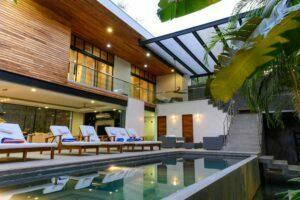
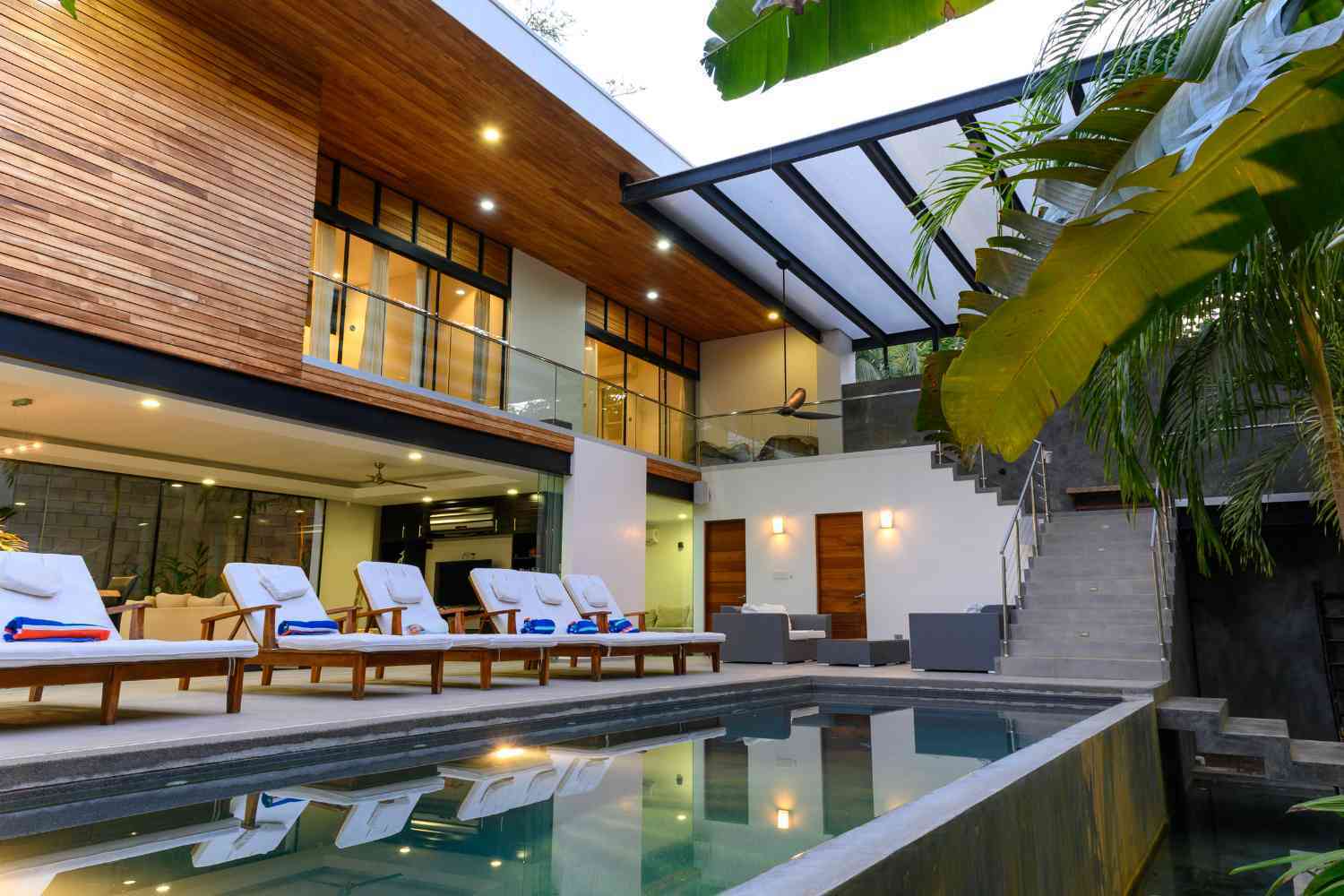
Eldeco has opened a sample villa at Terra Grande for private viewings — allowing serious buyers to experience the spatial quality, views, private pool, deck, and garden before committing. A site visit is strongly recommended: the Ganga valley view from a Terra Grande terrace, the evening light on the valley, and the quality of silence at 4,000 feet are experiences that no photograph or video can substitute. Contact Opulnz Abode at +91 9654888862 to schedule a private visit. Our team can arrange the drive, the site tour, and a private briefing on the villa selection and current availability.
Sources: Eldeco Group | Terra Grande March 2026 Press Release | RERA Uttarakhand UKREP04240000553 | HDFC Capital | NHAI Delhi-Dehradun Expressway | Opulnz Abode | India Sotheby’s Luxury Report 2025 | Mussoorie/Kasauli market data 2005-2026