Updated: April 2026 | Read Time: 5 mins | Team Opulnz Abode
The Migration Is Not a Trend Anymore — It Is a Structural Reality
When the original blog identified the migration of High Net Worth Individuals from Delhi to Gurgaon and Noida, it was making a case that still required defending. In 2026, the argument has been settled conclusively by data that would have seemed fantastical even three years ago.
Gurugram alone recorded ₹24,120 crore in ₹10 crore-plus home sales in 2025 — surpassing Mumbai for the first time in India’s luxury real estate history. Noida and Greater Noida added another ₹9,358 crore. Together, NCR’s non-Delhi belt accounted for approximately ₹33,478 crore in ultra-luxury residential transactions in a single year.
Delhi’s old-money families are not being displaced — they are choosing to add NCR luxury to their portfolio while their children and grandchildren are actively relocating to Gurgaon and Noida for lifestyle, quality, and space.
The Five Reasons HNIs Choose Gurgaon Over Delhi in 2026
Reason 1 — Space That Delhi Simply Cannot Offer
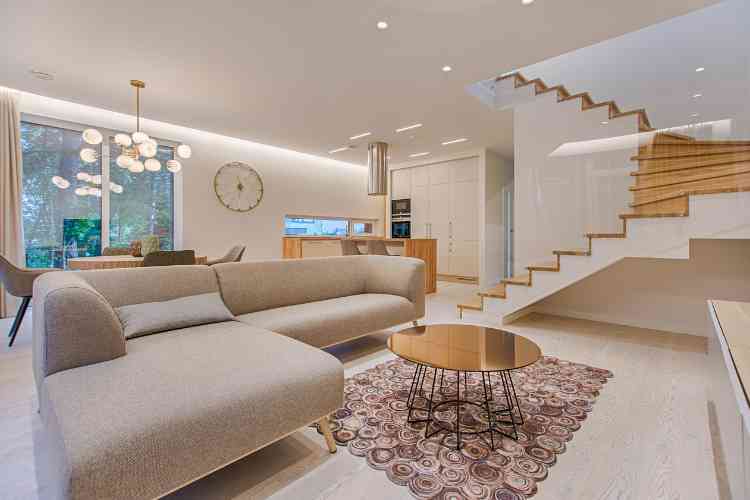
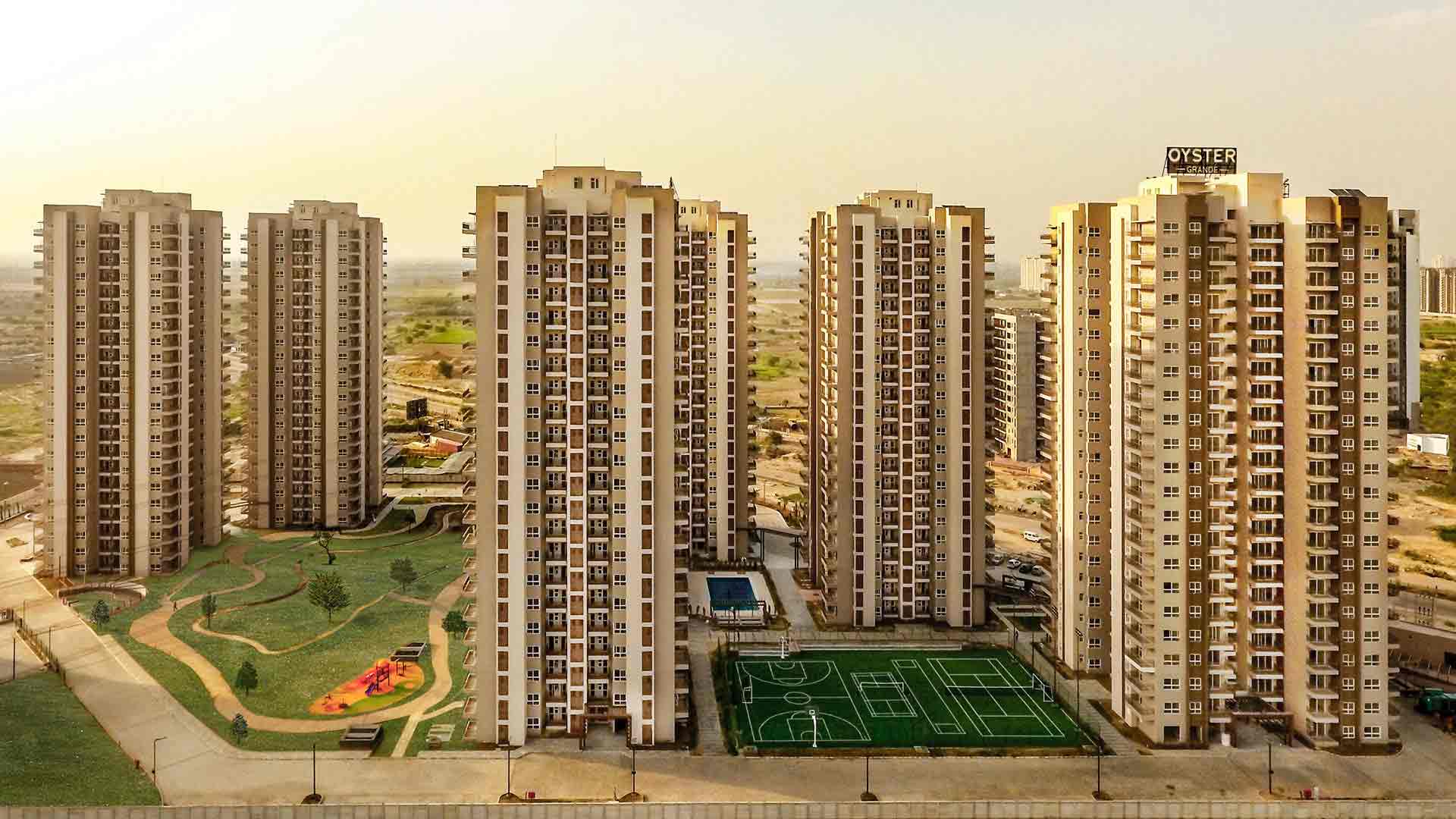
Delhi’s Lutyens’ zone and established residential sectors are built out. New supply comes only from redevelopment — which takes time, involves legal complexity, and delivers smaller footprints. Meanwhile, Gurgaon’s Golf Course Extension Road is offering 4,000-6,000 sq ft apartments as a standard product, at weighted average prices of ₹37,899/sq ft.
- DLF The Dahlias (GCR): 9,500-16,000 sq ft. The largest simplex apartments in India.
- Oberoi Three Sixty North (GCER): 5,500-8,500 sq ft. Private lift lobby.
- Delhi comparison: Godrej Connaught One offers 4 BHK but in 6.5 acres with 92 units total — scarcity, not space.
For an HNI family of four or five wanting 5,000+ sq ft, Gurgaon is the only NCR city that delivers this at scale.
Reason 2 — Corporate Proximity That Delhi Cannot Match
The shift of India’s corporate headquarters to Gurgaon is now complete. DLF Cyber City, Udyog Vihar, and Gurugram’s Phase 1-3 commercial zones host the NCR offices of:
- Amazon, Google, Microsoft, Accenture, IBM, Deloitte, EY, KPMG.
- Goldman Sachs, JP Morgan, Morgan Stanley, Deutsche Bank.
- HDFC Bank, ICICI Bank, Axis Bank — all with major Gurgaon operations.
The CXO who commutes to Cyber City from a Golf Course Road apartment has a 10-minute drive. The same CXO from South Delhi’s Vasant Vihar has a 45-minute commute. Time is money, and Gurgaon saves it.
Reason 3 — Gated Community Infrastructure vs Delhi’s Street-Level Living
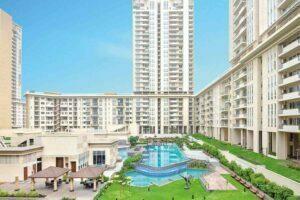
Gurgaon’s luxury residential projects offer an integrated lifestyle infrastructure that Delhi’s residential addresses — however prestigious — simply cannot replicate:
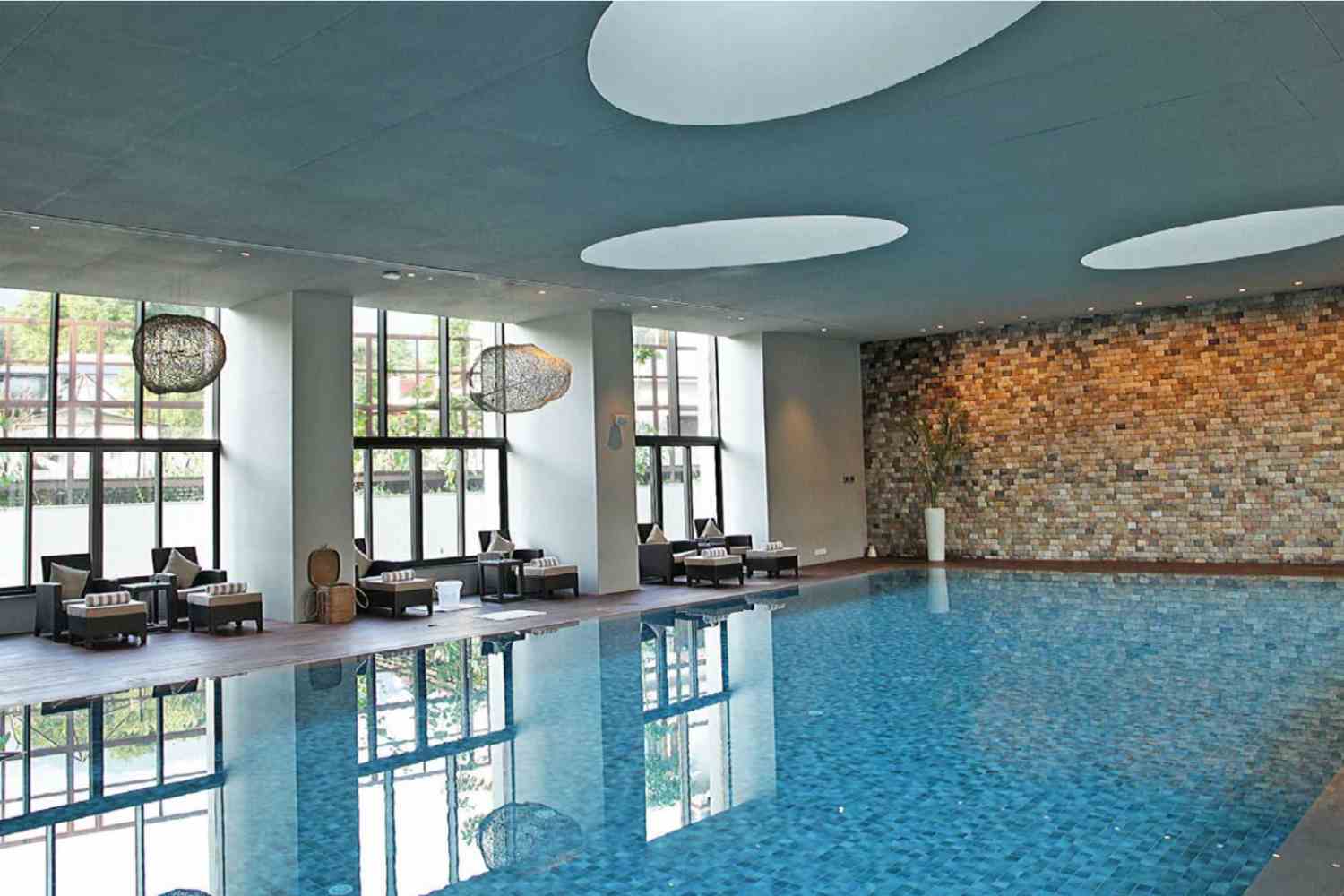
- 5-star clubhouses with spa, multiple pools, fine dining, and concierge — within the residential compound.
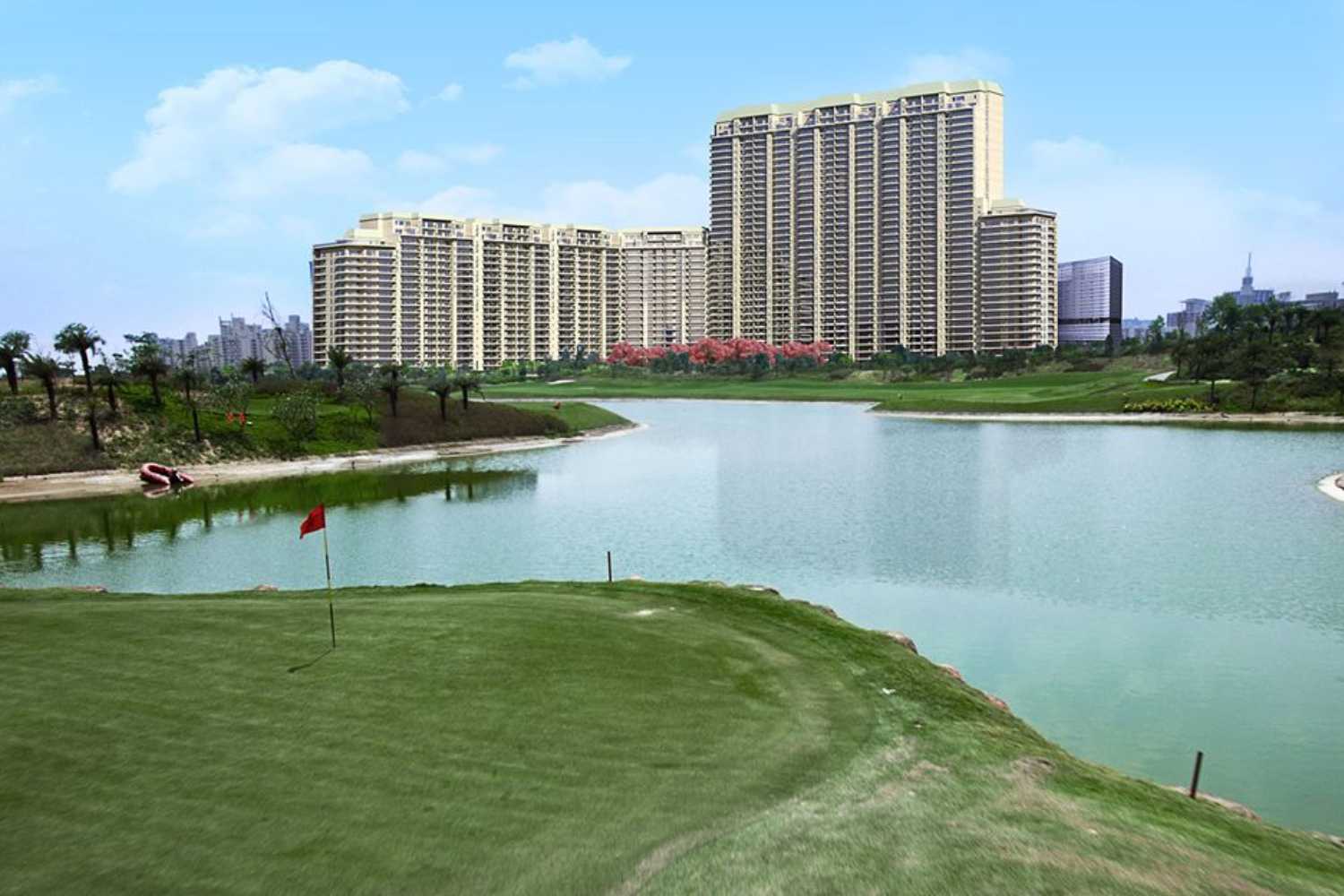
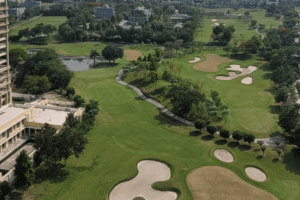
- Golf courses and sports facilities within or adjacent to residential communities.
- 24-hour security with international-standard protocol — biometrics, manned lobbies, CCTV at every access point.
- EV charging, air quality monitoring, and green building certifications — standard in new Gurgaon projects.
Delhi’s independent houses and older apartments cannot match this integrated infrastructure without extraordinary cost and complexity.
Reason 4 — Noida’s Tech Wealth and the Jewar Airport Story
Noida’s HNI migration is driven by a different engine: technology wealth creation. The Noida-Greater Noida Expressway corridor houses the NCR offices of:
- HCL Technologies, Wipro, Infosys, TCS — all with significant Noida campuses.
- Samsung, LG Electronics, Yamaha Motors — manufacturing executives who want proximity to Noida’s industrial belt.
- The upcoming Jewar airport will add aviation-industry executives, logistics company leadership, and airport-adjacent institutional employers to Noida’s professional ecosystem.
Reason 5 — The Quality of Projects That Delhi Cannot Host
Delhi’s height restrictions, FSI limitations, and administrative constraints mean that certain categories of luxury development — 40-50 floor high-rises, 20+ acre township projects — are simply not possible within Delhi’s municipal limits. Gurgaon and Noida have no such constraints, allowing:
- DLF Privana (Sector 76-77, Gurgaon): 11.8 million sq ft township. ₹5,590 crore in Phase 1 sales. Impossible to replicate in Delhi.
- Prestige City Indirapuram (Ghaziabad): 62.5 acres, 5 phases. ₹8,000 crore Phase 1 sold. Delhi has no equivalent.
- Elan The Emperor (Dwarka Expressway): 800+ units, private helipad, 100+ amenities. Not buildable in Delhi’s established zones.
Related Projects on Opulnz Abode
→ Luxury Flats in Gurugram — Explore All Projects
→ Luxury Flats in Noida — Explore All Projects
→ DLF The Dahlias Gurgaon — Project Page
→ Oberoi Realty Sector 58 Gurgaon — Project Page
Further Reading from Superluxere
→ Where India’s Ultra-Wealthy Actually Live — And Why
→ Birla Arika vs Max Estate 361 vs Godrej Sora — Gurugram 2026
→ Oberoi Three Sixty North Gurugram Sector 58 Launch 2026
→ Oberoi Three Sixty North: The Privacy Premium Decoded
Frequently Asked Questions
Why are HNIs leaving Delhi for Gurgaon?
Five converging drivers: more space per rupee (Gurgaon delivers 4,000-6,000 sq ft vs Delhi’s typical 2,500-3,500 sq ft at comparable luxury pricing), corporate proximity (Cyber City is 10 minutes from Golf Course Road), integrated gated community infrastructure that Delhi’s residential addresses cannot offer, better-quality new projects (40-floor towers, 20-acre townships are not buildable in Delhi’s established zones), and Gurgaon’s growing cosmopolitan social ecosystem.
Is Gurgaon or Noida better for HNI investment?
Gurgaon (₹24,120 crore in luxury sales, highest appreciation CAGR, strongest resale liquidity) is better for wealth preservation. Noida (₹9,358 crore, Jewar airport catalyst, lower base) is better for capital appreciation. Most sophisticated HNIs are allocating to both — Gurgaon as a lifestyle address and Noida as an appreciation play.
Is the HNI migration from Delhi to Gurgaon permanent?
Yes — the migration has structural anchors that are self-reinforcing. Once a critical mass of HNI families moved to Gurgaon, the social ecosystem (schools, hospitals, restaurants, clubs, social networks) upgraded to match. This ecosystem now makes Gurgaon self-sustaining as an HNI address — independent of any single developer or corridor.
What are the top schools and hospitals near Gurgaon’s luxury corridors?
Schools: The Shri Ram School (Aravallis, 5 min from GCR), GD Goenka, Amity International. Hospitals: Medanta The Medicity (8 min from NH-48), Artemis, Fortis. Combined, these institutions create a social infrastructure that rivals South Delhi’s established ecosystem — making Gurgaon a credible permanent family address.
What makes Noida attractive for HNIs despite its reputation?
Noida’s HNI buyer today is choosing it for different reasons than 2019: Jewar airport connectivity (operational 2026-27), Max Estate 128 and Trump Towers establishing ultra-luxury benchmarks, golf course and green zone living in Sectors 44-46, and pricing that is 40-60% below Gurgaon for comparable quality — meaning more space and better appreciation potential per rupee.
How has the HNI migration changed Gurgaon’s property prices?
Dramatically. GCER’s weighted average went from ₹24,855/sq ft in 2024 to ₹37,899/sq ft in 2025 — a 52% YoY increase. Dwarka Expressway surged 2,079% in transaction value. Golf Course Road now starts at ₹25,000/sq ft for any new launch. The HNI migration has not just raised prices — it has permanently rerated the corridor hierarchy.
Sources: India Sotheby’s Luxury Report 2025 | CRE Matrix | JLL NCR 2025 | Anarock | Superluxere Research 2026