April 2026 | Read Time: 6 mins | Team Opulnz Abode
You have done everything right. You have compared price per sq ft across six projects. You have checked RERA registration numbers. You have walked through two sample apartments. You have asked about possession timelines and payment plan structures. You are, by any standard, a well-prepared luxury buyer.
And yet there is one number that most buyers in your position never ask for — a number that will determine, more than any other single metric, whether the ₹10-20 crore home you are buying will feel like a private estate or a premium flat in a building that happens to cost ₹10 crore. That number is the Floor Area Ratio — or FAR.
Price per sq ft tells you what you paid. FAR tells you what you actually got.
What FAR Is — In the Language of a Buyer, Not a Planner
Floor Area Ratio is the ratio of the total built-up area of a project to the land it sits on. A FAR of 2.0 on a 10-acre plot means the developer can build a total of 20 acres’ worth of floor space — which they then distribute across however many apartments they choose.
Here is where the buyer’s interest begins. On that same 10-acre plot with the same FAR of 2.0, a developer can build:
- 800 apartments of 2,500 sq ft each — or
- 400 apartments of 5,000 sq ft each — or
- 200 apartments of 10,000 sq ft each.
The total construction is identical in all three scenarios. The FAR consumed is identical. But the buyer’s daily lived experience is completely different — in density, in privacy, in how much green space surrounds the building, in how many families you share your elevator with, in how many cars compete for the same parking ramp.
FAR does not change depending on which scenario the developer chooses. What changes is who benefits from the FAR allocation — 800 families or 200.
The Three Things FAR Determines That Your Brochure Never Mentions
1. How many neighbours you actually have
The most direct consequence of a project’s effective FAR is the size of the community you will live in. Consider two Gurgaon projects on similar land parcels.
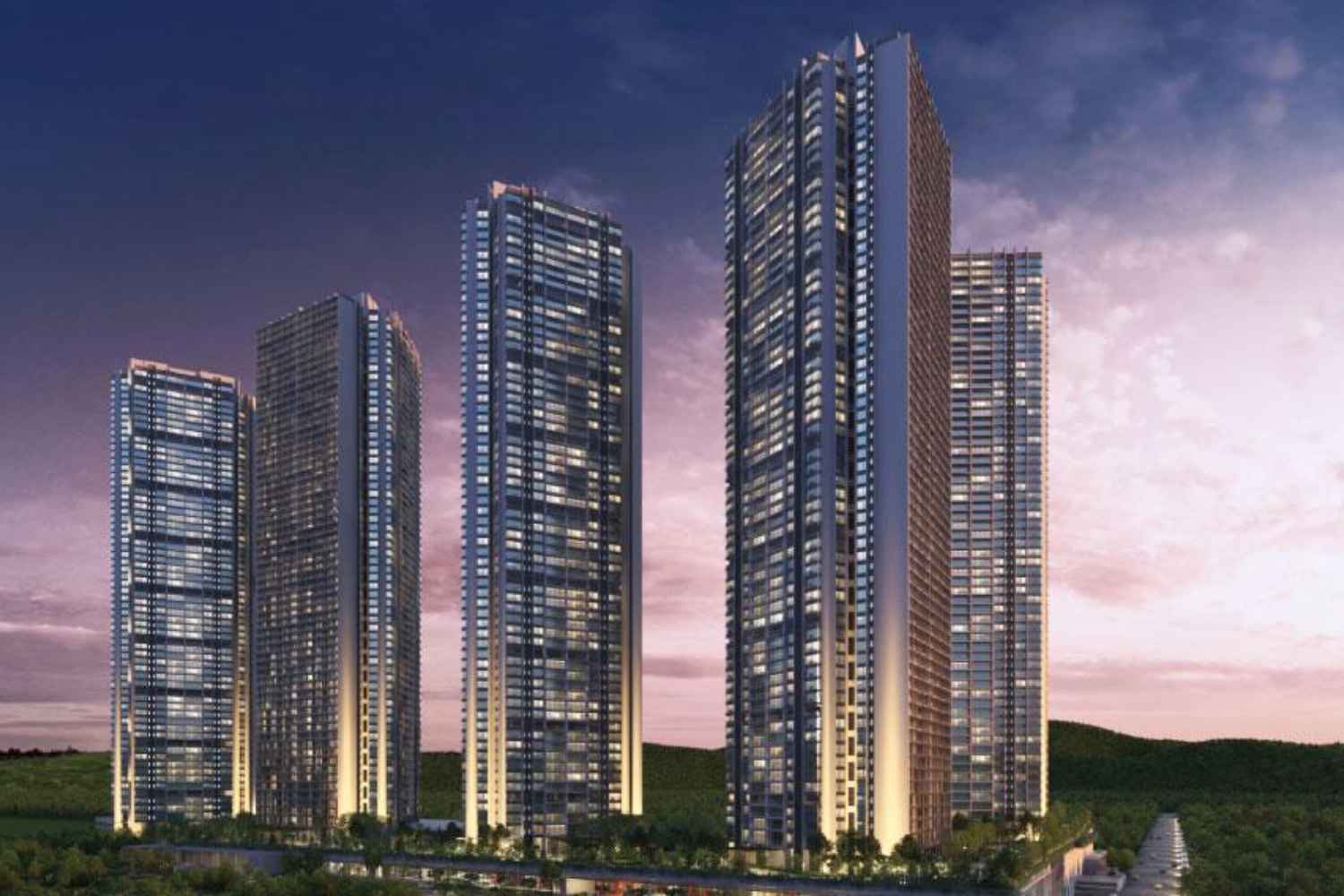
Project A: 14.81 acres. 450 homes. 30 homes per acre. Oberoi Three Sixty North Sector 58 — where 450 families share 14.81 acres, 1.75 lakh sq ft of clubhouse, and 10 acres of central landscape.
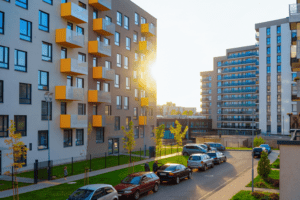
Project B: 14 acres. 1,400 homes. 100 homes per acre. An unnamed but common configuration in many ‘luxury’ mid-range projects across Gurgaon’s outer sectors.
The permissible FAR may be identical. The price per sq ft may even be similar. But at Project A, you have 449 neighbours. At Project B, you have 1,399. The clubhouse at Project A has 2,400 sq ft per family. At Project B, it has 400 sq ft per family. The pool at Project A serves 450 families. At Project B, it serves 1,400. These are not lifestyle preferences. They are arithmetic consequences of FAR deployment.
2. How much of the land you actually use
A developer who maximises FAR — building to the full permissible limit — must cover the maximum permissible ground footprint with construction. What remains for open space, landscape, and community zones is the minimum that regulations require. The advertised ‘40% open space’ is often the regulatory minimum, not a developer’s act of restraint.
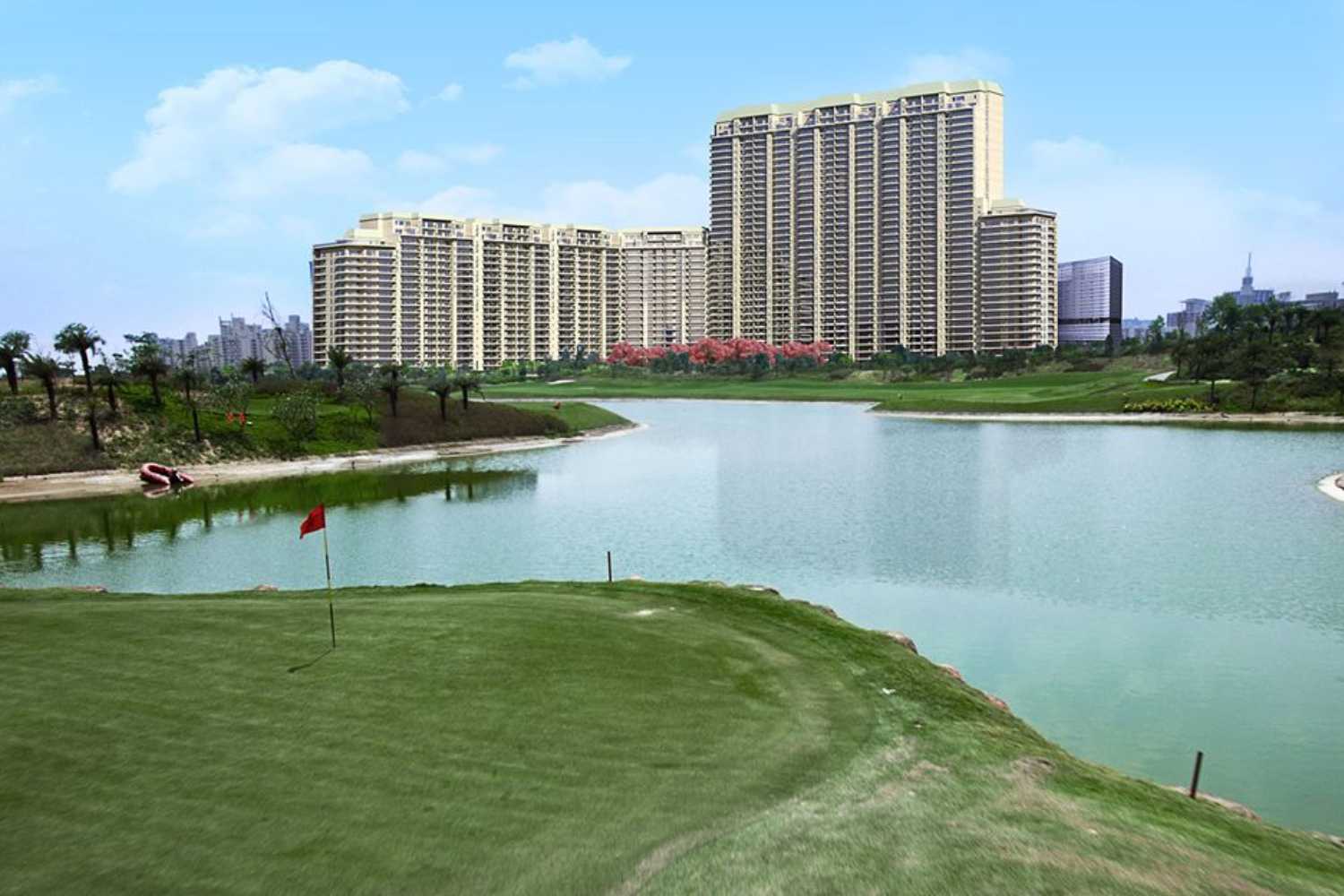
Compare this to DLF The Dahlias — 17 acres, 421 homes, a 40-acre Central Park, a 4-acre lake, and a 4 lakh sq ft clubhouse. The 40-acre Central Park alone is 2.4x the project’s total land area — made possible only because DLF deployed its permissible FAR across 421 homes rather than the 1,000+ that the same FAR could theoretically have supported. The open space is not a bonus. It is the direct consequence of consuming less FAR per unit than the maximum permissible.
3. What your home will look like in 10 years
High-density projects age differently from low-density ones. When 1,400 families share a clubhouse, the wear and maintenance economics change: the resident welfare association’s per-family maintenance contribution must stretch across more sq ft of shared infrastructure. Lifts are serviced more frequently. Pools require more chemicals. Common area cleaning is a larger operation. The physical infrastructure depreciates faster under heavier use.
Low-density projects, in contrast, have fewer families sharing more infrastructure — which means the per-family maintenance cost supports higher quality upkeep. The lobby stays cleaner. The pool stays more exclusive. The garden looks better maintained. These effects compound over a decade: the premium between a well-maintained low-density project and a worn high-density project widens every year, and with it, the resale premium.
The FAR Trap — When ‘Luxury’ Pricing Meets High-Density Planning
The most dangerous category in Indian luxury real estate is the project that charges ₹15,000-25,000 per sq ft — firmly in the luxury price bracket — while delivering a density that belongs in the premium mid-market. These projects exist across every NCR corridor, and they are bought by buyers who checked price per sq ft and sample flat quality but never asked about FAR.
The warning signs of a FAR trap:
- More than 60 units per acre — check total units, divide by land area.
- Clubhouse smaller than 500 sq ft per family — check clubhouse size, divide by total units.
- Open space claimed as a percentage without specifying the baseline — 60% of what? The site area? The net plot area? The non-built area?
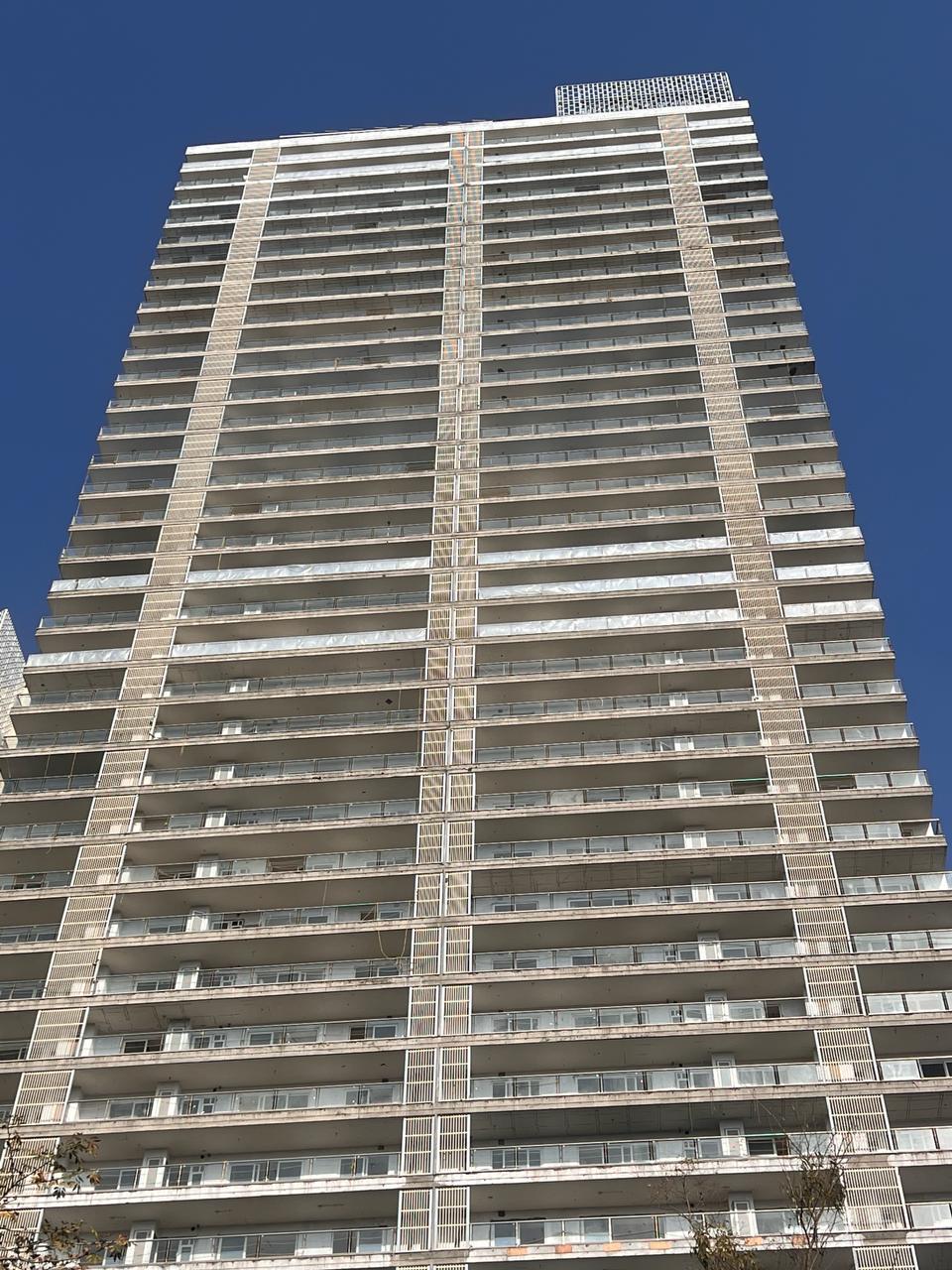
- More than 4 units per floor in towers above 30 floors — in a 40-floor tower with 4 units per floor, you have 160 families per tower sharing 4 elevators. That is 40 families per lift across 40 floors.
- Payment plan incentives that seem unusually generous — sometimes a signal that the project is moving slowly because buyers who visited have done the density calculation.
The Projects in NCR That Get FAR Right — And What Buyers Can Learn From Each
Experion One42 Golf Course Road — ~100 units on 3 acres: 33 units per acre
Thirty-three units per acre across three towers of 45 floors each. At this density, the 2 lakh sq ft clubhouse delivers approximately 2,000 sq ft per family. The pool serves 100 families. The gym is never crowded. The lobby is never a rush. The project has deployed its permissible FAR with a philosophy of maximising per-family space at every level — not just within the apartment, but across the entire community infrastructure.
Max Estate 128 Noida — 268 units on 10 acres: 27 units per acre
Twenty-seven units per acre. Eighty percent open space. The remaining 20% of the 10 acres is built upon. This is what IGBC Platinum certification and the LiveWell® philosophy look like in FAR terms — a developer who has chosen community quality over unit count, and who is vindicated by a resale market that is more active than most primary launches in Noida.
Birla Arika Sector 31 Gurgaon — 500 units on 13.27 acres: 38 units per acre
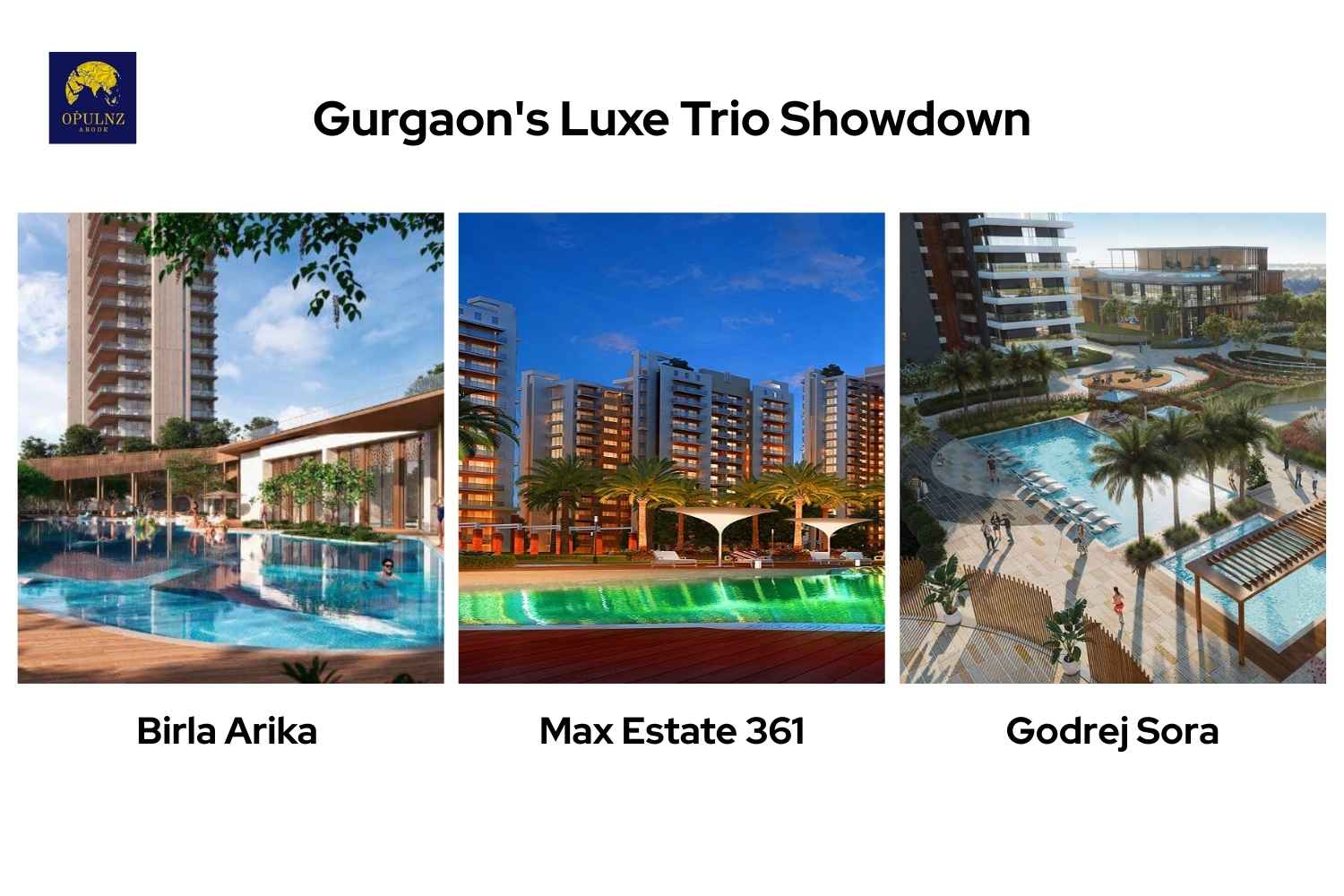
IGBC Gold Pre-Certified. 75% open space. 58% green cover. Seven towers on 13.27 acres with 7.5 acres of central green — which is 56% of the total site area dedicated to a single park. The LifeDesigned® philosophy begins with a FAR decision: build fewer homes on this land, and make the remaining land genuinely exceptional. At ₹10.75-12.94 crore starting, the buyer is paying partly for the apartment and partly for the 7.5-acre garden that the low-density FAR decision made possible.
DLF The Dahlias — 421 units on 17 acres: 25 units per acre
Twenty-five units per acre for India’s most expensive residential project. At this density, the 40-acre Central Park, the 4-acre lake, and the 4 lakh sq ft clubhouse are not marketing superlatives — they are the arithmetic consequence of a developer who built 421 homes when their FAR permitted significantly more. The invitation-only sales model and the ₹65-150 crore price range exist in the same value ecosystem as the FAR decision: this project is curated at every level, including how much it was permitted to build versus how much it chose to build.
The Practical Buyer’s FAR Checklist
Before your next luxury site visit, add these four questions to your checklist:
- Q1: What is the total number of units on how many acres? Divide units by acres. Under 40 is good. Under 25 is exceptional. Over 80 warrants careful scrutiny for a project calling itself luxury.
- Q2: What is the clubhouse size and what is the clubhouse-per-family ratio? Divide total clubhouse sq ft by total units. Under 200 sq ft per family is average. 500-1,000+ is exceptional.
- Q3: What percentage of the land is open space — and what is the baseline? Ask specifically: ‘Is this percentage of the total site area or the net plot area?’ And: ‘Is this percentage above the regulatory minimum or a developer choice?’
- Q4: How many units per floor in each tower? 2 units per floor in a 40-floor tower means 80 homes per tower. 6 units per floor means 240 homes per tower. Same height, categorically different living experience.
Related Projects on Opulnz Abode
→ Opulnz Abode: Experion One42 Golf Course Road — 100 units, 3 acres
→ Opulnz Abode: DLF The Dahlias Gurgaon — 421 units, 17 acres, 40-acre central park
→ Opulnz Abode: Max Estates 128 Noida — 268 units, 10 acres, 80% open space
→ Opulnz Abode: Birla Arika Sector 31 Gurgaon — 500 units, 13.27 acres, 75% open space
→ Opulnz Abode: Oberoi Realty Three Sixty North Sector 58 — 450 units, 14.81 acres
Frequently Asked Questions
How do I check the FAR of a luxury project before buying?
Three methods: First, ask the developer or their authorised channel partner directly — ‘What is the total built-up area of this project and what is the total site area?’ Divide the first by the second. Second, check the RERA project registration — the RERA filing includes total built-up area and site area, both of which are public. Third, calculate units-per-acre as a proxy: total units ÷ total acres. This gives you density, which is the most buyer-relevant consequence of FAR.
Why do some luxury projects have more units per acre despite similar pricing?
Because the developer has chosen to maximise unit count (and therefore revenue) within the permissible FAR rather than maximise per-unit quality. Both are legal. Both are RERA-compliant. The difference is in development philosophy — and in what the buyer’s daily life actually feels like. A project with 100 units per acre at ₹18,000/sq ft is not equivalent to a project with 30 units per acre at ₹18,000/sq ft. The price per sq ft is the same; the community density is very different.
Does a lower FAR always mean a better luxury project?
Lower effective FAR relative to permissible maximum is a reliable indicator of better open space, lower density, and more generous community infrastructure. However, FAR alone does not guarantee project quality — a developer can have low density and still deliver poor specifications, bad design, or unreliable construction. The strongest luxury projects combine low effective FAR with premium specifications, credible developers, and IGBC green certification. Use FAR as the first filter, not the only one.
What is a good units-per-acre ratio for luxury projects in Gurgaon in 2026?
The best-in-class luxury projects in Gurgaon in 2026 run at 20-40 units per acre: DLF Dahlias (25/acre), Oberoi Three Sixty North (30/acre), Experion One42 (33/acre), Birla Arika (38/acre). Projects between 40-60 units per acre can still deliver quality luxury experiences if the individual apartment sizes are generous. Projects above 80 units per acre should be scrutinised carefully before calling themselves luxury, regardless of price per sq ft.
How does FAR affect resale value in luxury real estate?
Consistently and durably. Low-density projects hold their premium over time because: (1) the open space is permanent — it cannot be built over, (2) community infrastructure stays less crowded as the development ages, (3) the resale buyer pool for genuinely scarce luxury products (30-50 units per acre) is always larger than the available inventory. This supply-demand imbalance sustains premiums through market cycles in a way that high-density projects cannot match.
Is FSI the same as FAR in Mumbai?
Yes — FSI (Floor Space Index) and FAR (Floor Area Ratio) describe identical concepts. FSI of 2.0 in Mumbai permits the same construction as FAR of 2.0 in Gurgaon on the same plot size. The difference is in terminology: Mumbai, Chennai, and Pune use FSI; Delhi, Gurgaon, Bengaluru, and Noida use FAR. When comparing projects across cities, convert both to the same expression (either ratio or percentage) before comparing.
Reference source: Oberoi Realty Blog — ‘Floor Area Ratio (FAR): Meaning, Importance, and Calculation in Real Estate’ (April 2026). https://www.oberoirealty.com/blog/floor-area-ratio-far-meaning-importance-and-calculation-in-real-estate
Additional sources: HRERA | Noida Authority | DDA | India Sotheby’s Luxury Report 2025 | Opulnz Abode Research 2026