Most luxury home buyers spend weeks researching carpet area, price per sq ft, possession timelines, and RERA registration numbers. Very few look at the one number that determines whether their ₹10 crore apartment will feel like a private estate or a well-appointed box in a crowded building — the Floor Area Ratio.
FAR is not a technical abstraction for architects and municipal planners. It is the most practical single metric available to a home buyer for understanding a project’s density, open space, privacy, and long-term lifestyle quality. This blog explains what FAR means, how to calculate it, how it differs from FSI, and — most importantly — how to use it when evaluating luxury projects in Gurgaon, Noida, and Delhi.
What Is Floor Area Ratio (FAR)?
The Floor Area Ratio is the ratio of the total built-up floor area of a building to the size of the land plot on which it stands. It is the regulatory measure that tells a developer — and by extension, a buyer — how much construction is permitted on a given piece of land.
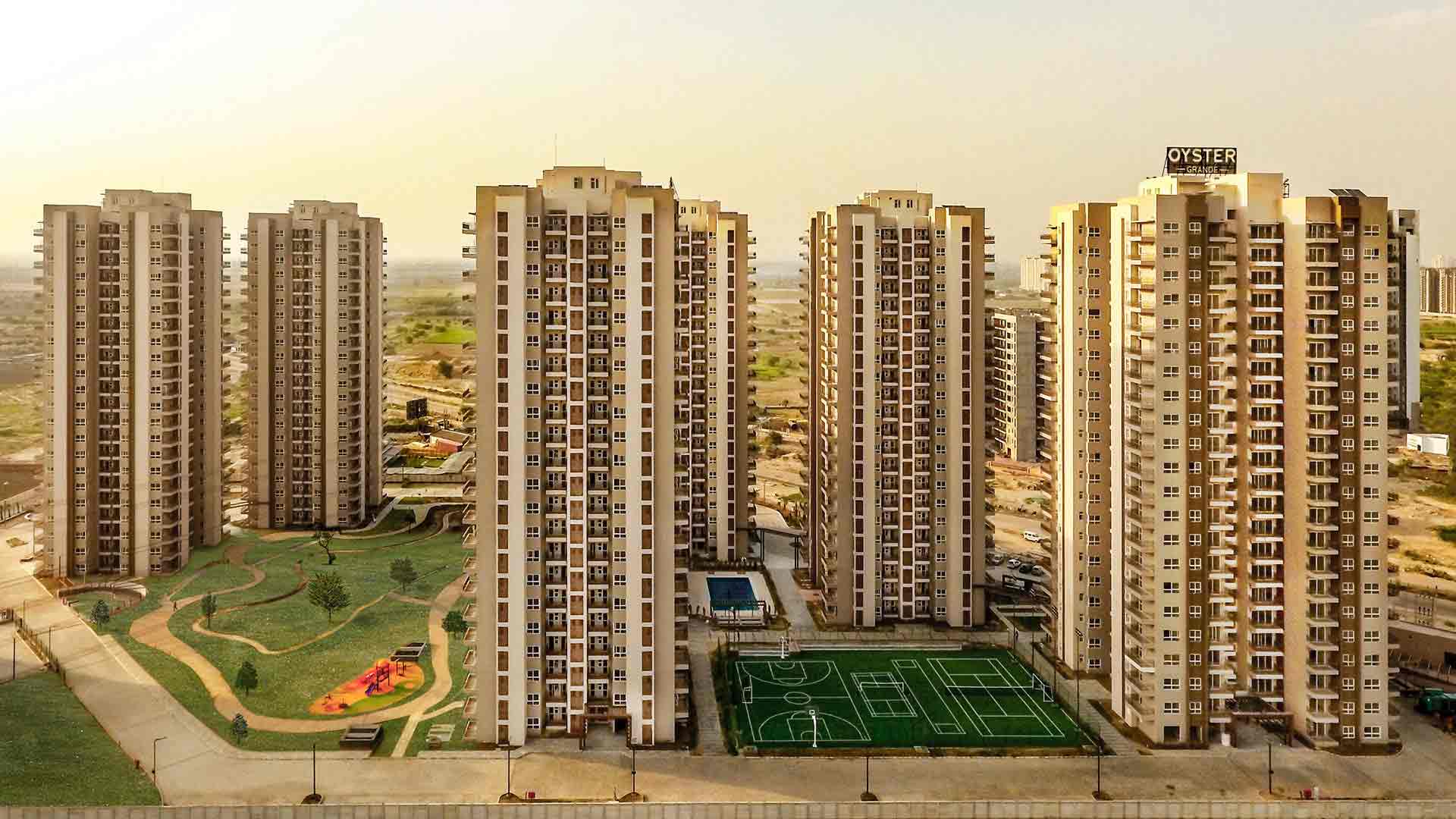
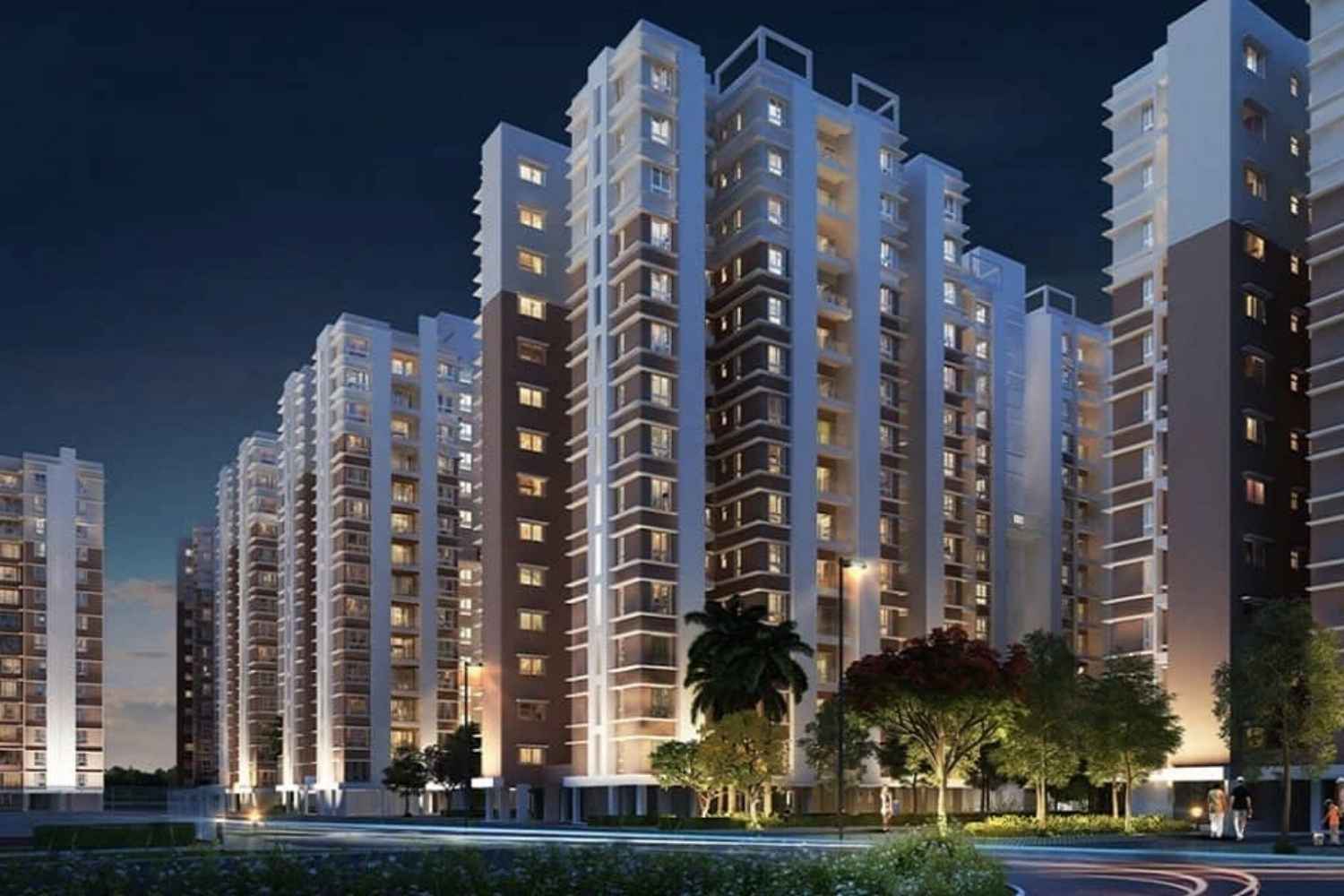
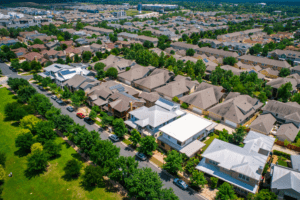
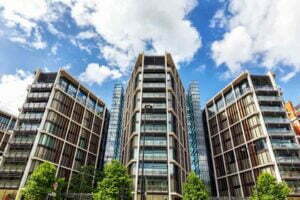
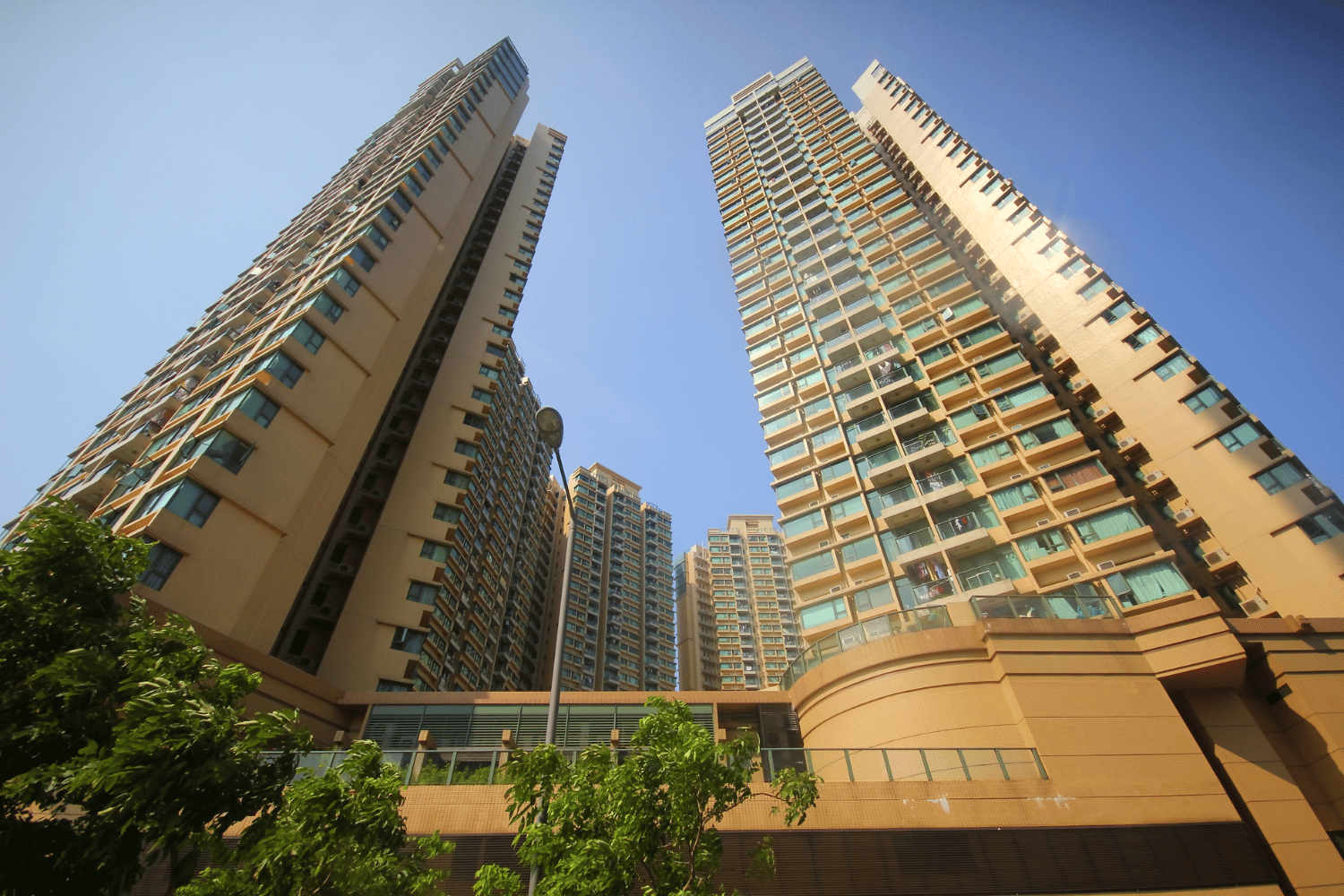
Think of FAR as a density cap. A lower FAR means the developer is permitted to build less relative to the land size — which typically translates to fewer apartments, more open space, better light, and a more private living experience. A higher FAR means more construction is permitted relative to the land — which can mean more apartments, tighter spacing between towers, less green area, and a denser community feel.
FAR is not just a regulatory number. It is the architectural DNA of a project — it determines whether your home breathes or suffocates.
The FAR formula — straightforward but consequential
The Floor Area Ratio formula is:
FAR = Total Building Floor Area ÷ Gross Plot Area
Where:
- Total Building Floor Area = the cumulative constructed space across all floors of the building, as defined by local municipal regulations.
- Gross Plot Area = the total legally approved land area of the plot, including all components within its boundaries.
A practical example: if a developer acquires a 10-acre (approximately 40,000 sq metre) plot in Gurgaon with a permissible FAR of 2.5, the total built-up area permitted across the entire project is 1,00,000 sq metres (40,000 × 2.5). The developer can choose to distribute this 1,00,000 sq metres across 2 towers or 20 towers — but the total construction remains capped at 1,00,000 sq metres regardless.
What counts toward FAR — and what does not
This is where FAR calculation requires city-specific knowledge. Different municipalities treat different spaces differently:
- Typically included in FAR: All enclosed, usable floor space — living rooms, bedrooms, kitchens, bathrooms, utility areas, servant quarters.
- Treatment varies by city: Balconies and decks (some municipalities count them fully, some partially, some not at all), covered parking, basements, lift shafts, service staircases.
- Typically excluded: Open terraces, uncovered parking, plant rooms and utility terraces in many jurisdictions.
For a buyer, the practical implication is this: a project that offers generous balconies and private decks in a city where balconies are excluded from FAR effectively delivers more usable space per unit without consuming the developer’s permissible FAR quota. This is one reason why premium projects in Gurgaon have been able to offer wrap-around decks and private terraces while still keeping apartment density low.
FAR vs FSI — Two Names for the Same Concept
If you have read real estate documents from both Mumbai and Delhi, you have likely encountered both FAR and FSI — and wondered whether they are different. They are not. They describe the same regulatory concept, expressed differently.
| Aspect | FAR (Floor Area Ratio) | FSI (Floor Space Index) |
| Full Form | Floor Area Ratio | Floor Space Index |
| Expression | Numerical ratio (e.g., 1.5, 2.0, 3.5) | Percentage (e.g., 150%, 200%, 350%) |
| A value of 2.0 means… | You can build 2x the plot area | You can build 200% of the plot area |
| Cities that use it | Delhi, Gurgaon, Bengaluru, Noida | Mumbai, Chennai, Pune, Hyderabad |
| Core concept | Development capacity permitted on a plot | Same — only the expression differs |
The distinction matters only when you are comparing projects across cities. A Mumbai project with an FSI of 3.0 and a Delhi project with a FAR of 3.0 are both permitted to build 3 times their plot area — the same development intensity, described in different terminology.
Why FAR Matters More Than Most Buyers Realise
FAR and apartment size — the inverse relationship
On a fixed land parcel with a fixed permissible FAR, a developer who builds fewer, larger apartments is constrained by FAR in the same way as a developer who builds more, smaller apartments. The difference is who benefits. Low-density projects like Oberoi Three Sixty North Sector 58 — approximately 450 homes on 14.81 acres — allocate the permissible FAR across fewer homes. The result is more sq ft per apartment, more open space around each tower, and a community that feels materially different from a comparable land parcel with 1,200 apartments.
The inverse relationship is consistent: more apartments per acre = smaller individual apartments + less open space + higher density. The buyer evaluating a luxury project should always divide the number of units by the land area to get a units-per-acre density — and compare this number across projects before comparing price per sq ft.
FAR and open space — the green area that luxury projects cannot manufacture without land
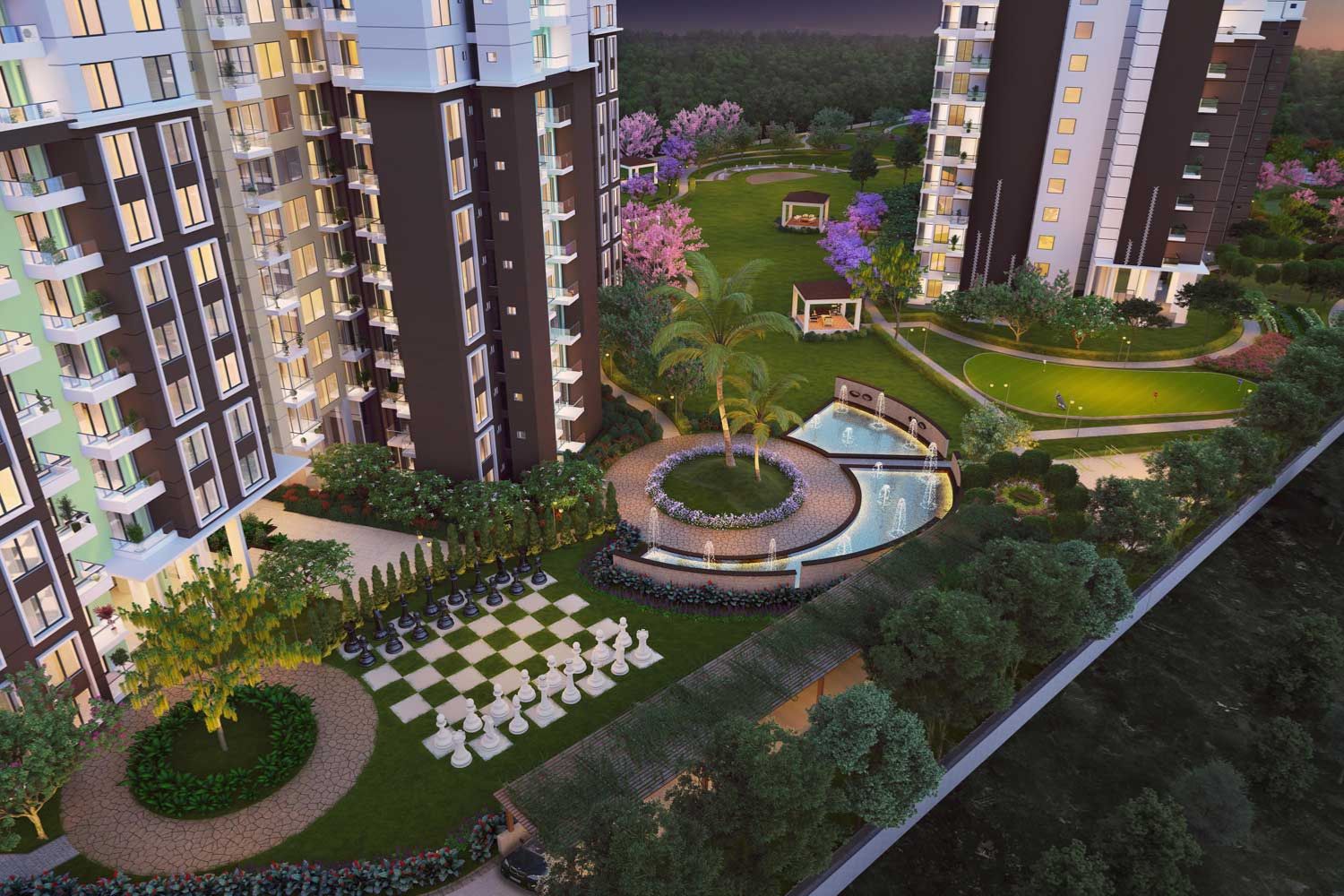
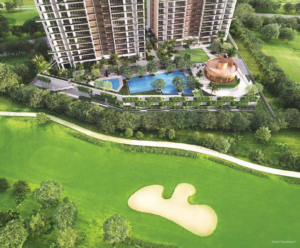
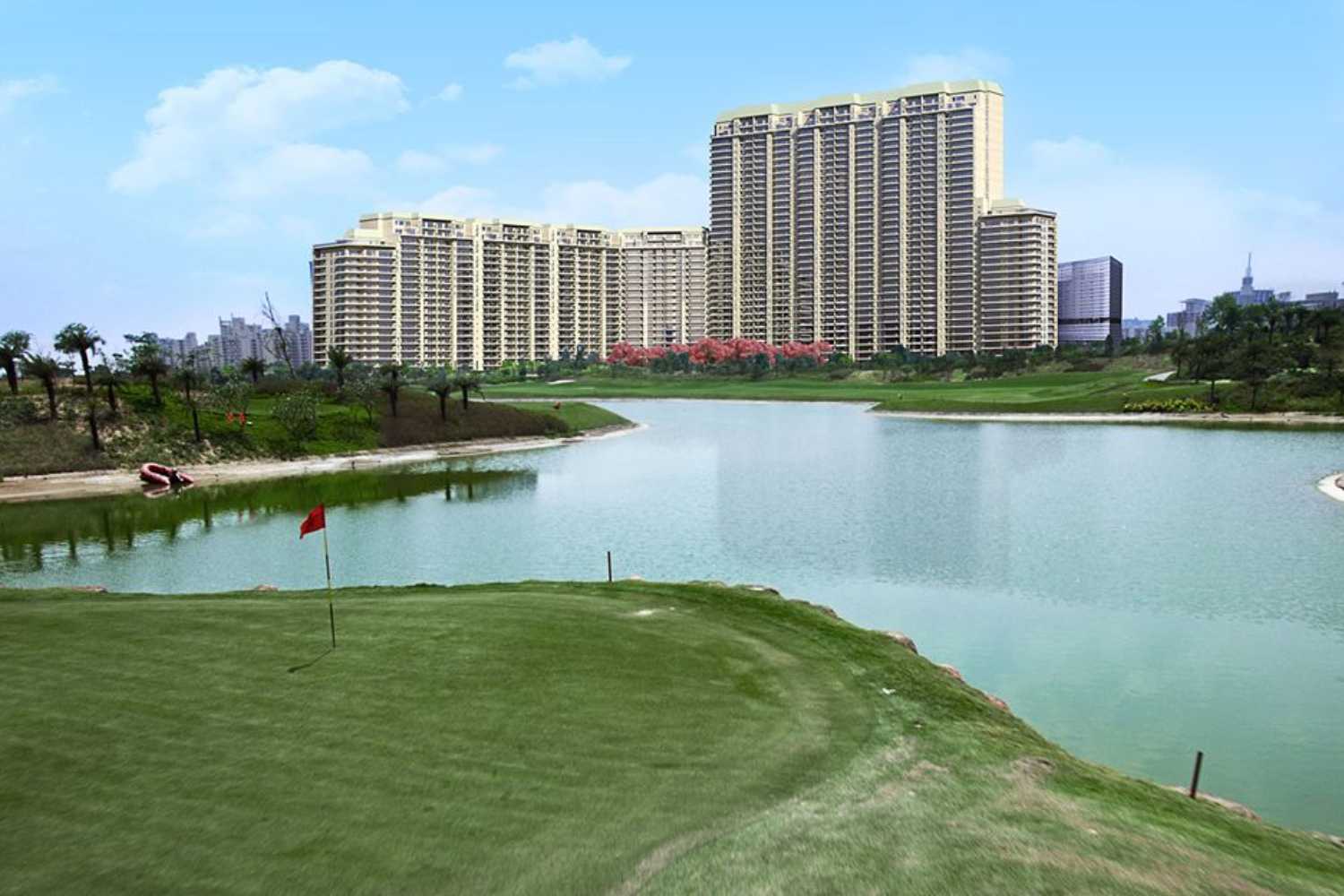
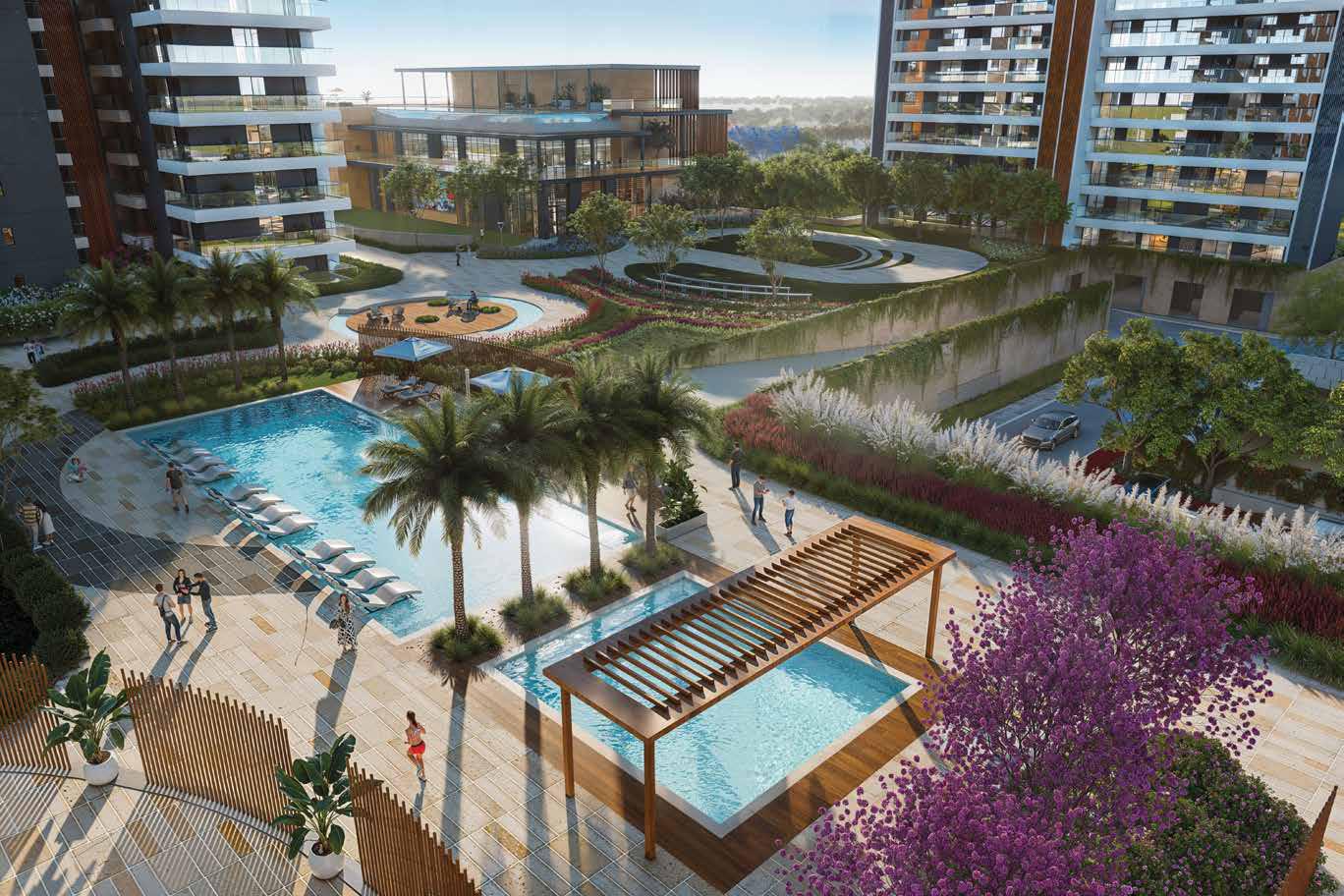
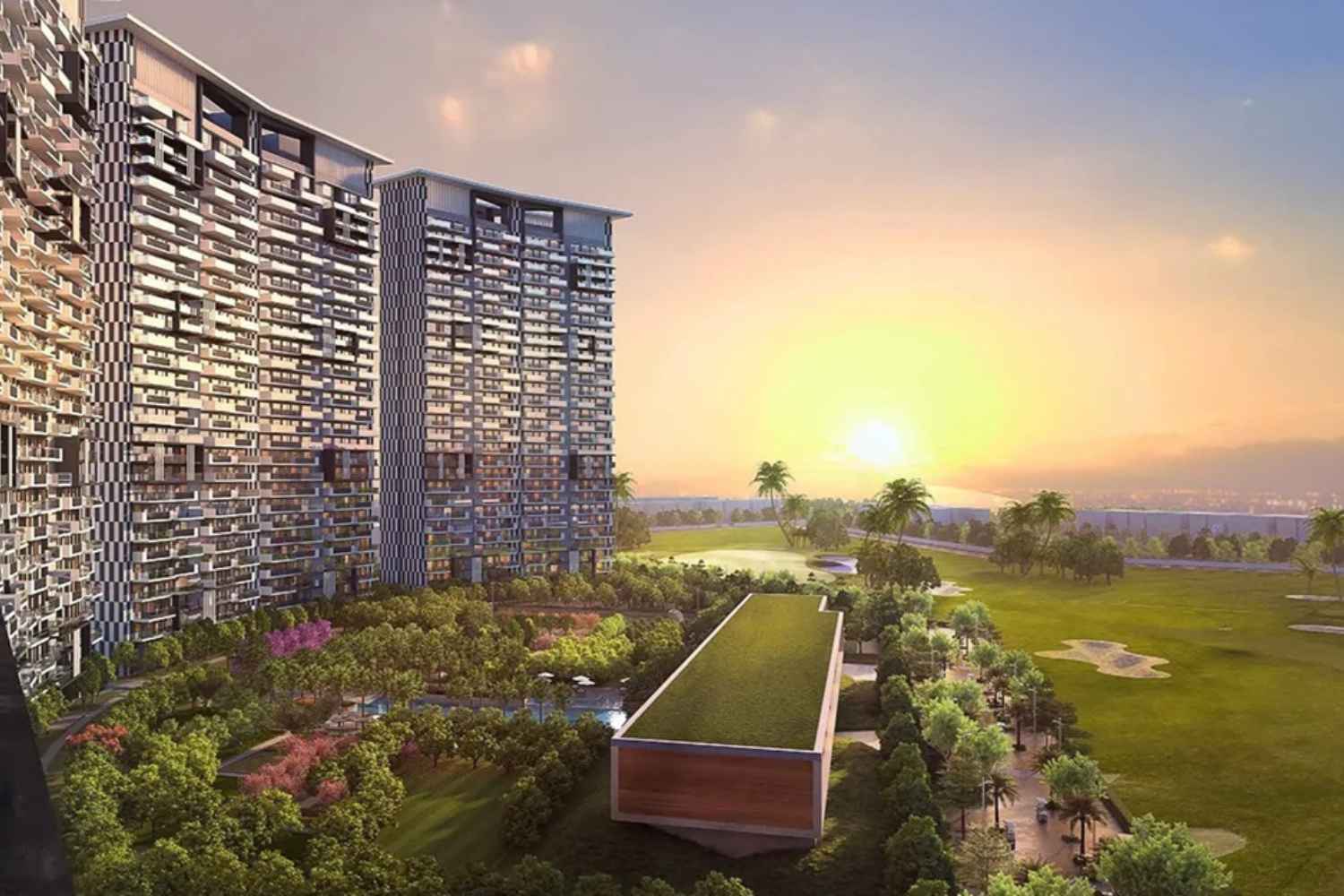
Open space, landscape, and community greenery are not independent of FAR. They are a direct function of how much of the permissible FAR a developer chooses to leave unconsumed as open ground. A project that uses its full permissible FAR leaves the minimum possible open space. A project that deliberately consumes less than its permissible FAR converts the remaining land into parks, gardens, water bodies, and community zones.
DLF The Dahlias’ 40-acre Central Park and 4-acre lake are not acts of generosity — they are the result of DLF deliberately building only 421 homes on 17 acres when the permissible FAR could have supported significantly more. That restraint is what creates the central park. Similarly, the 80% open space at Max Estate 128 is the tangible result of 3 towers on 10 acres — a developer choosing to leave 8 acres untouched when the permissible FAR would have allowed more construction.
FAR and resale value — the long-term premium of low density
Globally, residential projects with lower density — built at below maximum permissible FAR — command a consistent premium over comparable projects that have maximised FSI. The reasoning is straightforward: low-density projects are irreplaceable. Once built at 25 units per acre, the project cannot become denser without demolishing and rebuilding. The open space is permanently locked in. This permanence is why NRI buyers and family office investors consistently target the lowest-density projects in their preferred corridors — not just for the daily lifestyle quality, but for the durable resale premium that scarcity creates.
How FAR Varies Across India’s Major Cities
Permissible FAR is not a national standard — it varies by city, by zone within a city, by land use classification, and sometimes by the width of the road adjacent to the plot. Understanding these city-level differences helps buyers compare projects across markets.
| City / Zone | Typical FAR Range | Key Regulator | Notes |
| Gurugram (residential) | 1.75 – 2.5 | DTCP / HRERA | Varies by sector and plot size |
| Delhi (residential zones) | 1.2 – 3.5 | DDA / MCD | Higher FAR for Transit-Oriented Development zones |
| Noida (residential) | 2.0 – 3.5 | Noida Authority | Higher FSI in group housing; varies by sector |
| Mumbai (residential) | 1.0 – 3.0+ (with TDR) | MCGM | Premium FSI and TDR can significantly increase effective FSI |
| Bengaluru (residential) | 2.25 – 3.25 | BBMP / BDA | Varies by road width and zone classification |
| Hyderabad (residential) | 1.6 – 4.0 | HMDA / GHMC | GO 168 allows higher FAR for large plots |
For luxury buyers, the most meaningful number is not the permissible FAR ceiling — it is the actual FAR consumed by the developer. A Gurgaon project with a permissible FAR of 2.5 that builds to only 1.2 effective FAR is delivering dramatically more open space and privacy than a project that builds to the full 2.5. Always ask the developer or their authorised partner: what is the effective FAR of this project?
How to Use FAR When Evaluating a Luxury Project
The three-step FAR check every luxury buyer should do
Before committing to any ₹5 crore-plus purchase, run this simple check:
- Step 1 — Calculate density: Total units ÷ total land area (in acres) = units per acre. Best-in-class luxury projects in Gurgaon and Noida run at 20-30 units per acre. Average luxury runs at 60-100 units per acre. Mass-market density starts above 120 units per acre.
- Step 2 — Ask the effective FAR: Ask the developer or authorised partner what proportion of the permissible FAR has been consumed. A project consuming 60-70% of permissible FAR is delivering meaningful open space. A project consuming 95%+ has left almost nothing.
- Step 3 — Cross-check the open space claim: If a developer claims 70-80% open space, verify: 70-80% of what? Of the total land area, or of the non-built area? The most credible claims come from projects where the developer has voluntarily consumed less than the permissible FAR.
Related Projects on Opulnz Abode — Low-Density Luxury Done Right
→ Opulnz Abode: DLF The Dahlias Sector 54 Golf Course Road — 421 units on 17 acres
→ Opulnz Abode: Oberoi Realty Three Sixty North Sector 58 — 450 units on 14.81 acres
→ Opulnz Abode: Max Estates Sector 128 Noida — 268 units on 10 acres
→ Opulnz Abode: Birla Arika Sector 31 Gurgaon — 500 units on 13.27 acres, IGBC Gold
→ Opulnz Abode: Experion One42 Golf Course Road — ~100 units on 3 acres
Frequently Asked Questions
What is Floor Area Ratio (FAR) in simple terms?
FAR is the ratio of a building’s total floor area to the size of the land it sits on. A FAR of 2.0 means the total construction across all floors equals twice the plot area. Governments set a maximum permissible FAR for each zone — developers cannot build beyond this. The lower the effective FAR of a project relative to the permissible maximum, the more open space, greenery, and privacy the project delivers.
What is the difference between FAR and FSI in Indian real estate?
FAR (Floor Area Ratio) and FSI (Floor Space Index) describe the same concept — the development capacity permitted on a plot of land. FAR is expressed as a ratio (e.g., 2.5) and is used in cities like Delhi, Gurgaon, and Bengaluru. FSI is expressed as a percentage (e.g., 250%) and is used in Mumbai, Chennai, and Pune. A FAR of 2.5 and an FSI of 250% permit exactly the same amount of construction on the same plot.
How does FAR affect the quality of a luxury apartment in Gurgaon?
Directly and significantly. A Gurgaon luxury project with a lower effective FAR has fewer apartments on the same land — which means more open space around each tower, better natural light and ventilation in each unit, a less crowded community feel, and typically larger individual apartments. Projects like DLF The Dahlias (17 acres, 421 homes), Oberoi Three Sixty North (14.81 acres, 450 homes), and Experion One42 (3 acres, ~100 homes) are low-density precisely because their developers have consumed significantly below the permissible FAR ceiling.
What is a good FAR for a luxury project in India?
There is no single benchmark — it depends on the city, the land parcel, and the permissible maximum. What matters is the effective FAR relative to the maximum permissible. As a practical guide: luxury projects that consume 50-70% of permissible FAR typically deliver the best open space and density ratios. At the unit level, look for projects with fewer than 40 units per acre as a starting point for genuine low-density luxury.
Does FAR include balconies and parking in India?
It depends on the city and local development control regulations. In Gurgaon, balconies and decks are typically excluded from FAR up to a certain area — which is why premium Gurgaon projects can offer wrap-around decks and private terraces without those spaces consuming the permissible FAR quota. Basement parking is generally excluded. Open terraces are typically excluded. Enclosed utility areas, servant quarters, and all habitable rooms are included. Always verify with the developer or an authorised channel partner for the specific project and jurisdiction.
Why do Mumbai projects have higher FSI than Delhi projects?
Mumbai’s extreme land scarcity — a peninsula city with severely constrained developable land — has driven the government to permit higher FSI to accommodate density. Delhi and Gurgaon have more available land and lower density requirements, which allows for lower FAR norms. Additionally, Mumbai’s Transfer of Development Rights (TDR) system allows developers to purchase additional FSI above the base permissible limit — effectively enabling very high effective FSI in certain locations. This is why Mumbai luxury towers can be 50-70 floors while Delhi’s premium projects tend to be 40-50 floors.
Reference source: Oberoi Realty Blog — ‘Floor Area Ratio (FAR): Meaning, Importance, and Calculation in Real Estate’ (April 2026). https://www.oberoirealty.com/blog/floor-area-ratio-far-meaning-importance-and-calculation-in-real-estate
Additional sources: DTCP Haryana | Noida Authority | DDA Delhi | Opulnz Abode Research 2026